Homage to the changing play of colours
The Côte d’Opale stretches from Dunkerque in the north to the mouth of the river Somme in the south. It was given its name by the French painter Édouard Lévêque in 1911 as a tribute to its special light and changing play of colours. He was born in Le Touquet.
At the beginning of the 20th century, this city was already a popular destination for well-heeled guests from both sides of the English Channel. The attractive town has retained the charm of its beginnings to this day. Impressive villas line the streets surrounded by tall, old trees within a huge wooded area.
The Seaside Resort was extremely popular and developed splendidly. At the time, less than four hours from London and only three from Paris, the elegant seaside resort attracted well-heeled guests from both France and England. Nothing has changed to this day. However, journey times have become shorter. Its most famous residents include French President Emmanuel Macron and his wife Brigitte. Their house Monéjan in Avenue Saint-Jean is constantly guarded by heavily armed police officers.
Thanks to Pierre de Coubertin
In 1903, the ‘Directeur des activités sportives’ of the seaside resort, Baron Pierre de Coubertin, had the idea of developing it into a sports paradise. He succeeded par excellence. His name is still present in many places in the seaside resort today. For example, the huge tennis court in the centre of the resort, which continues to host major international tournaments, is named after him.
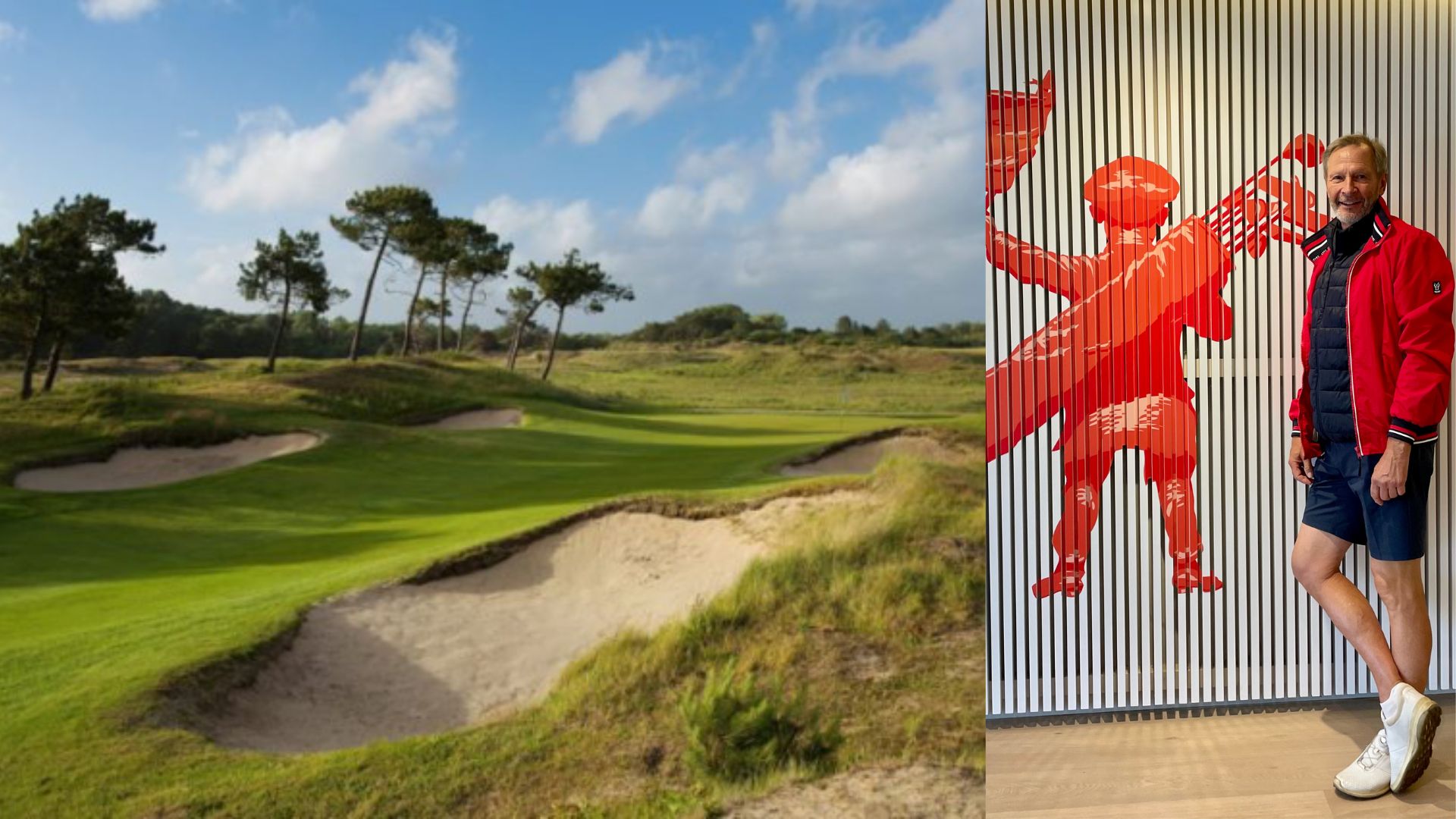
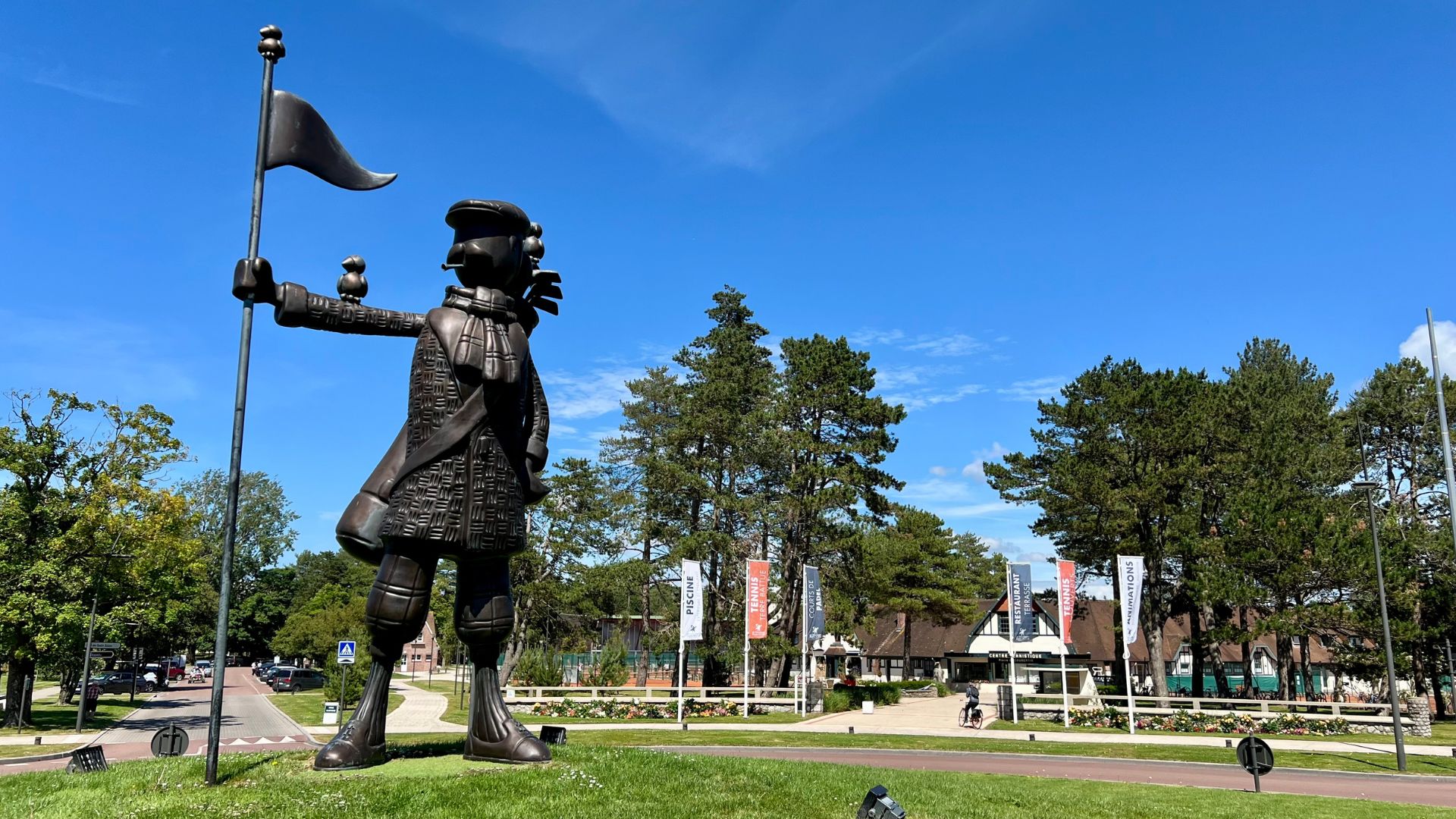
Since 2020, the four-metre bronze statue Big Birdie has been enthroned on a hill in the middle of the ‘Rond Point des Sports’ roundabout in front of its entrance. It was created by the artist Alain Godon. It is a reinterpretation of the town’s landmark, which has been a small red golf caddy since 1925. The original carries a flag in its left hand and a golf bag on its back. The logo is omnipresent in the seaside resort.
120-year history
In 1904, the British Prime Minister Lord Balfour opened La Fôret Course as the first of the three courses. The British played a major role in the seaside resort and the club from the very beginning. The course was designed by the recognised golf course architect Horace Hutchinson.
The Parkland Course was followed by the nine holes of the Le Manoir Course in 1910. The Open de France was held at La Fôret in 1914 and 1921. Its first winner was John-Douglas Edgar.
In 1928, construction began on the La Mer Course, which was built in the middle of the dunes behind the other two courses towards the sea. Just three years later, it was opened by the Prince of Wales. Harry S. Colt and Charles ‘Hugh’ Alison, two of the most renowned golf course architects of their time, took on its design. The Daily Mail honoured their work with ‘The new course has the most magnificent 18 holes a scratch golfer could ever find. Each of them is a masterpiece.’ At that time, Le Touquet, with its 45 holes, was one of the largest golf courses in the world. It hosted the French Open Championships in 1935 and 1939.
The courses and clubhouse, which were destroyed during the Second World War, were rebuilt and remodelled over the following decades. The La Mer Course was given its finishing touches by Frenchman Patrice Boissonnas and Dutchman Frank Pont, who meticulously restored the original Colt/Alison design as far as possible in 2017.
The last Open de France was held here in 1977. The winner was none other than the legendary Seve Ballesteros.
La Mer – the best links course in France
Although the 18-hole, par 71 La Mer course has no direct access to the sea, it is considered a links course. Its layout has everything that makes a typical links course. The varied holes are designed to be challenging. Experienced golfers will enjoy this course, whose hard fairways allow the balls to roll quickly over the sandy soil. This makes it ideal for playing all year round. Water and heat have little effect on it.
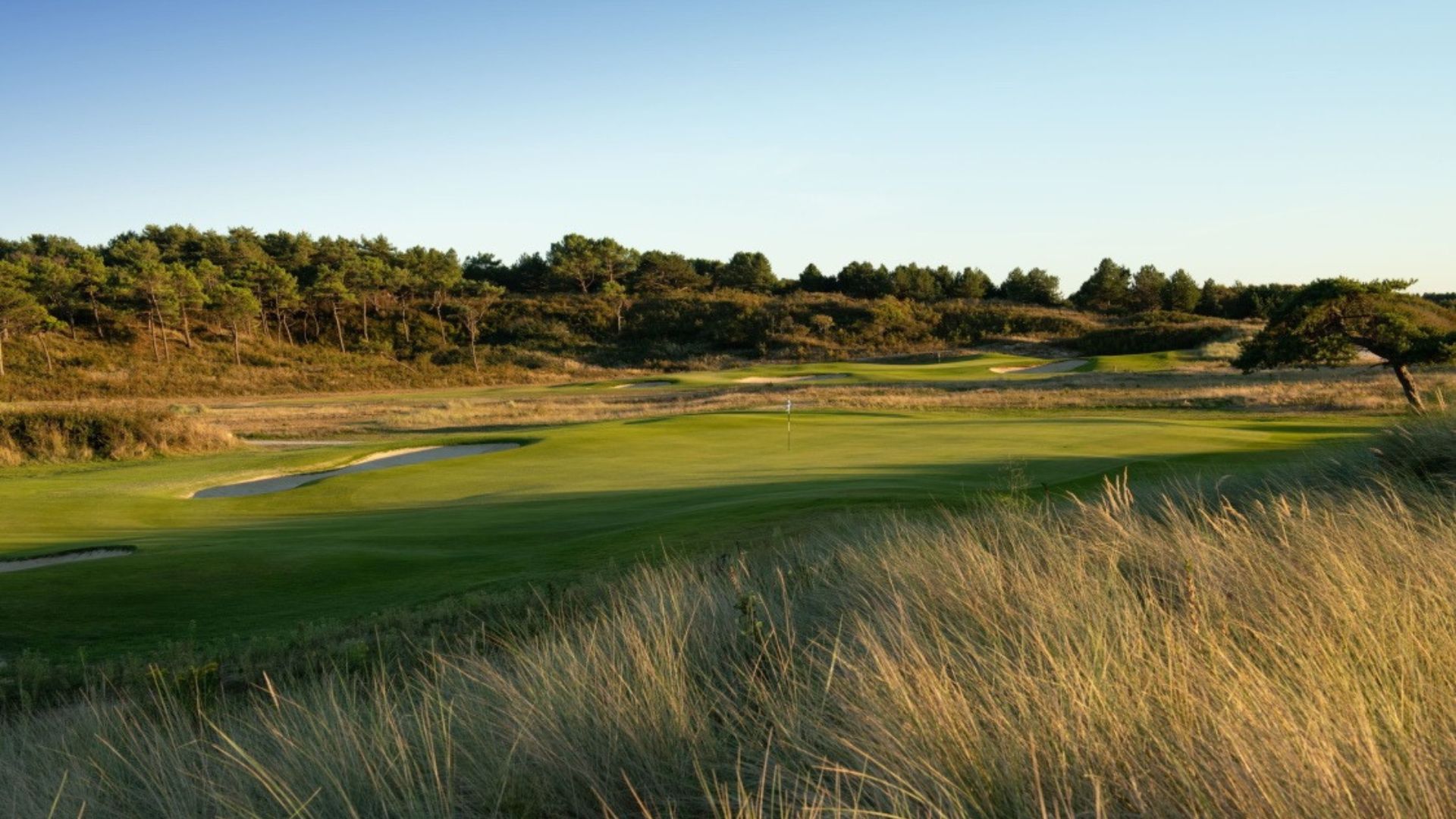
It is less than ten minutes’ walk from the clubhouse across the Le Manoir Course. Those who prefer to drive there by car will find their own car park below a small, modest starter’s hut.
Initially, the course runs through the sandy terrain. This changes later, as there are several metres of elevation to overcome on the courses through the dunes. The caddies were not to be envied back then. Today, there are plenty of buggies available for those who prefer more comfort.
The course is also characterised by the strategically placed fairway and green bunkers, which are not filled with brightly shining quartz sand but with the natural sand of the dunes. Like the greens, they require a well-considered game. These are usually generously sized, undulating and fast. They often rise towards the back. If you leave your shots too short or don’t hit the undulating greens in the right place, the balls from their false fronts tend to run back again. The numerous bushes along the fairways and the rough add to the difficulty of the course.
Men tee off from the black (slope 138), white (134) or yellow (127) tees, ladies from the blue (128) or red tees (121). From the back tees, the course has a length of 6,368 metres.
It was voted France’s best links course in 2023 by top100golfcourses.com. It was ranked 12th in France and 59th in continental Europe.
The start is a moderate start par 5 laid out as a dogleg left.
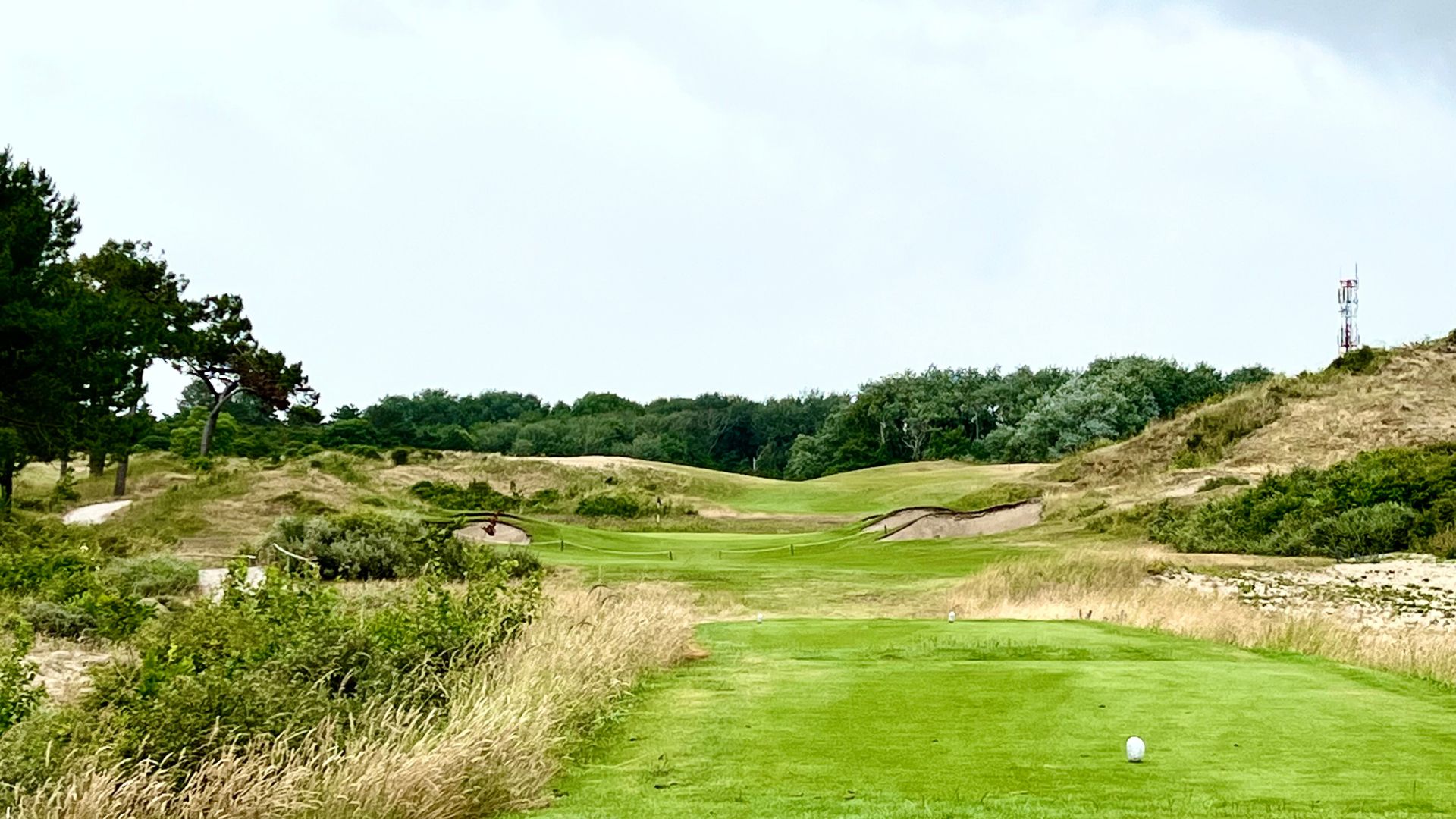
One of my highlights follows on the second hole: It’s a par 3, which green is protected by a narrow ravine with dunes on both sides.
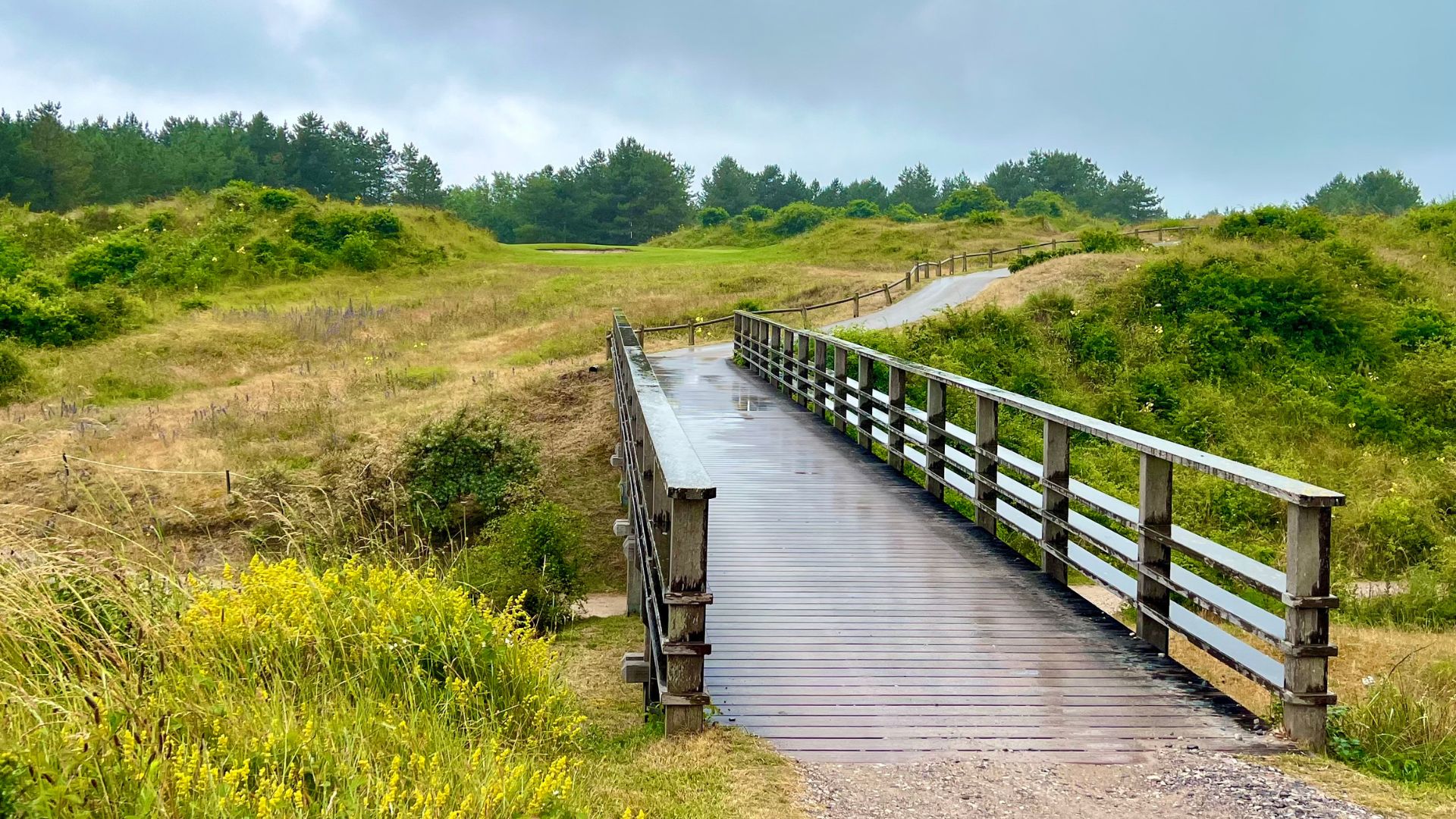
The other par 3s also have their charm. The signature hole #10, is an uphill hole over a ditch, 139 metres long, whose green is only partially visible. A bridge connects the tee to the green. The wind often blows head-on from the sea, making it difficult to choose the right club.
The 360-degree view from the Panorama View Point above the tee of the last fairway is impressive. A small sign points to it. From here, you have a magnificent view of the entire course as far as the sea visible in the distance.
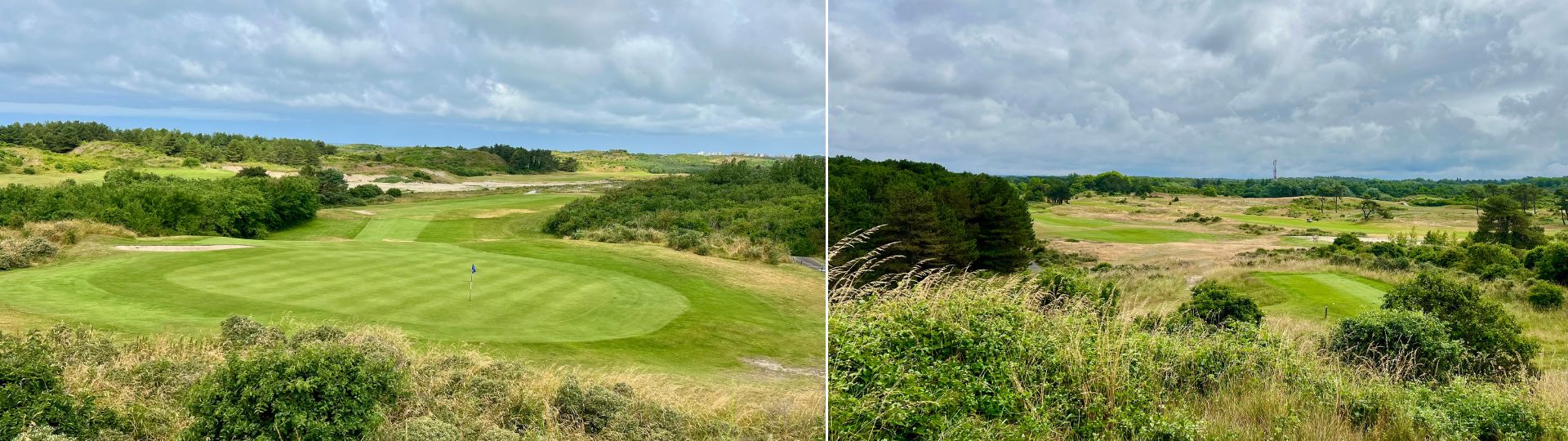
Unfortunately, we weren’t lucky with the weather and were caught out by the odd rain shower. But this in no way detracted from our positive impression of this great course.
Le Forêt Course
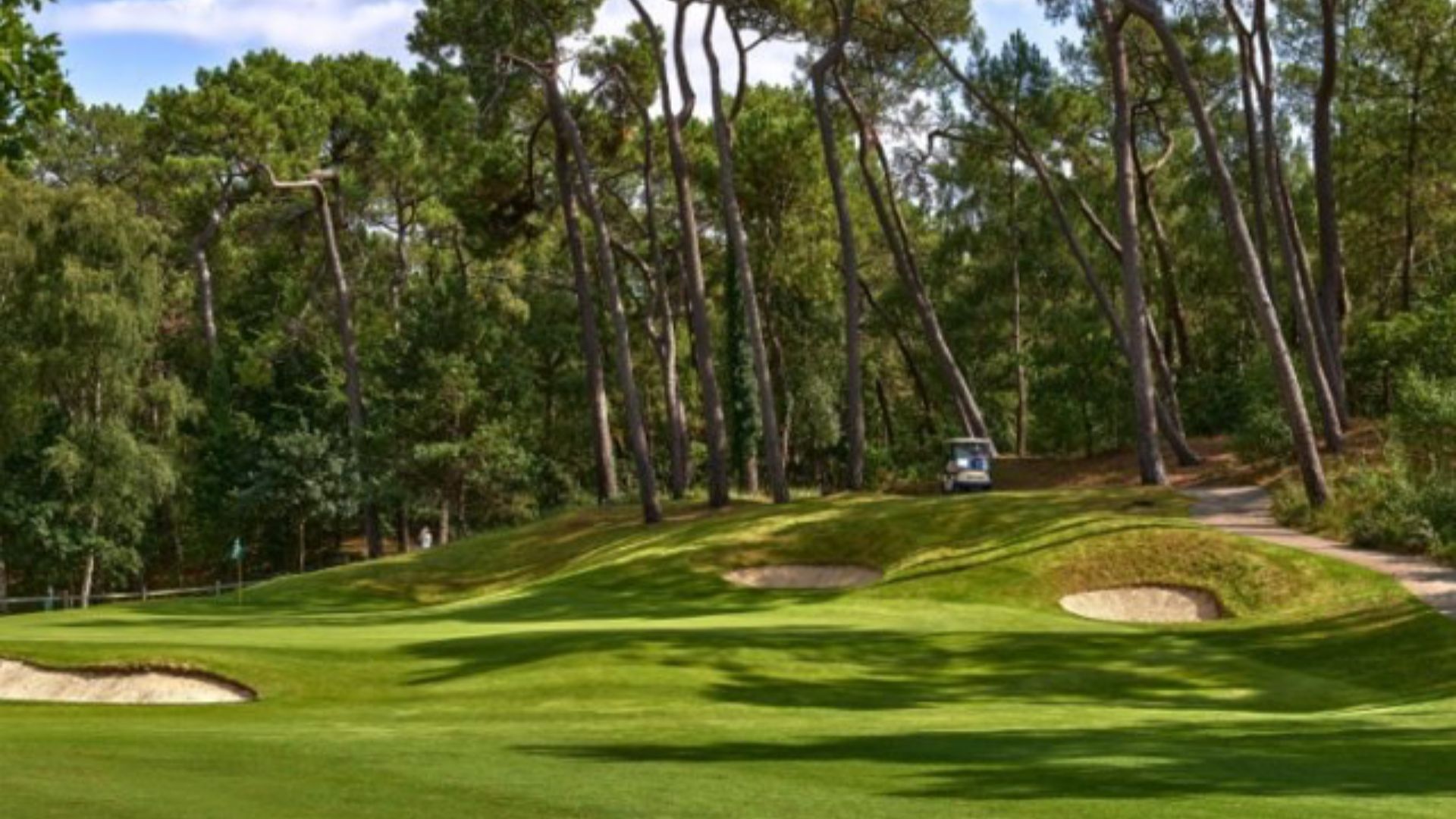
The resort’s first course is a par 72 and lives up to its name. Its 18 holes run flat through 100 hectares of beautiful, dense pine, oak and willow forest around the clubhouse.
At 5,915 metres, it is shorter than its big brother. The fairways offer plenty of space, especially on the front nine. It lies in complete tranquillity and allows for a relaxed round. Men tee off from two different tees (slope 131/126), ladies from three tees (slope 125/125/122).
Le Manoir Course
The 9-hole course is located between holes one, two, three and 18 of the Le Forêts Course. It has one par 5, five par 4 and three par 3 holes that lead through the mostly flat terrain. Men have 2,413 metres to overcome, ladies 2,130 metres. It rounds off the resort’s offering perfectly for golf beginners.
Practise facilities in abundance
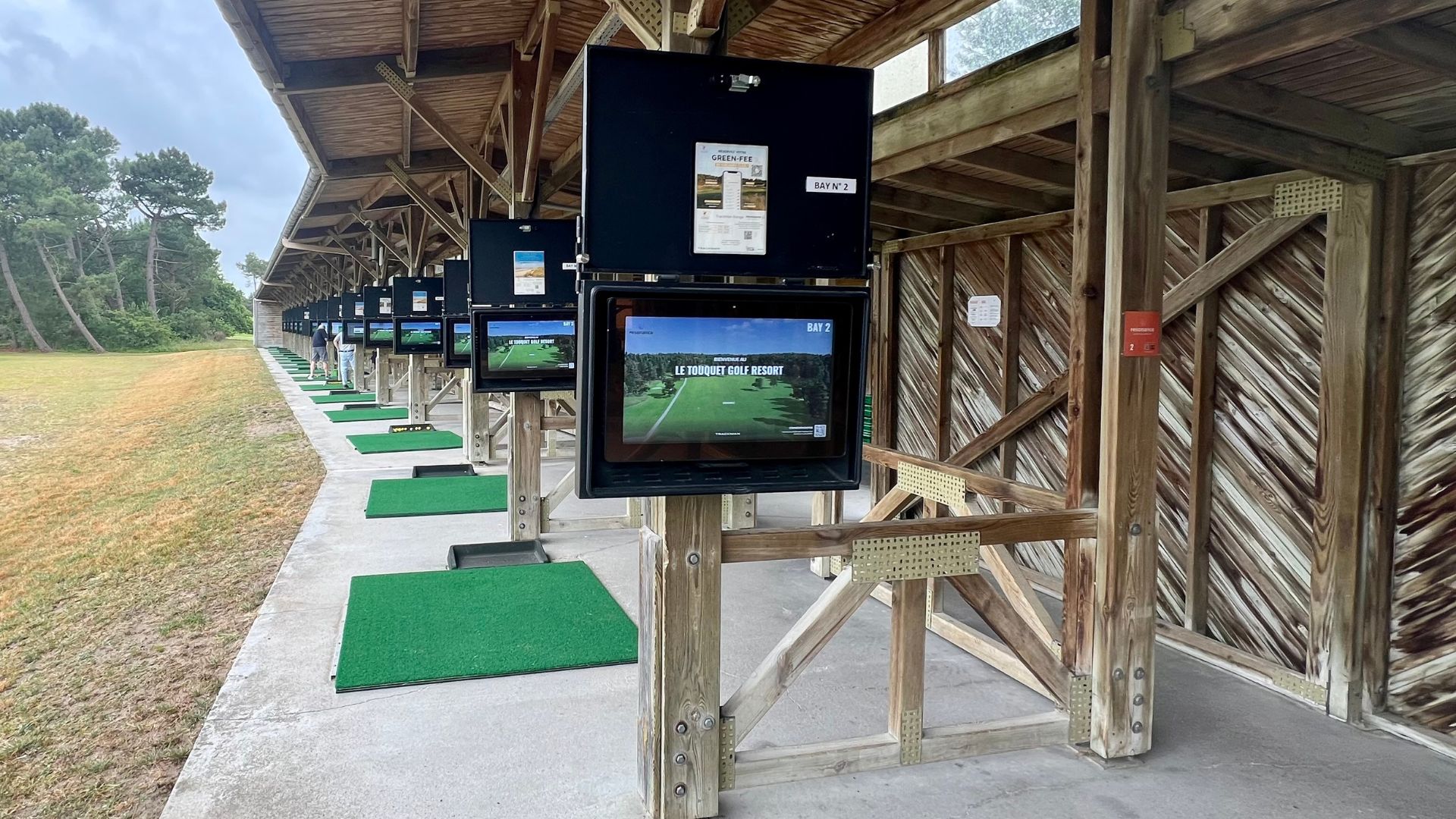
The shipping and putting green is located directly in front of the clubhouse. The driving range can be reached via a short walk through the forest. Each of its covered boxes is equipped with a Trackman.
Pavilion-style clubhouse
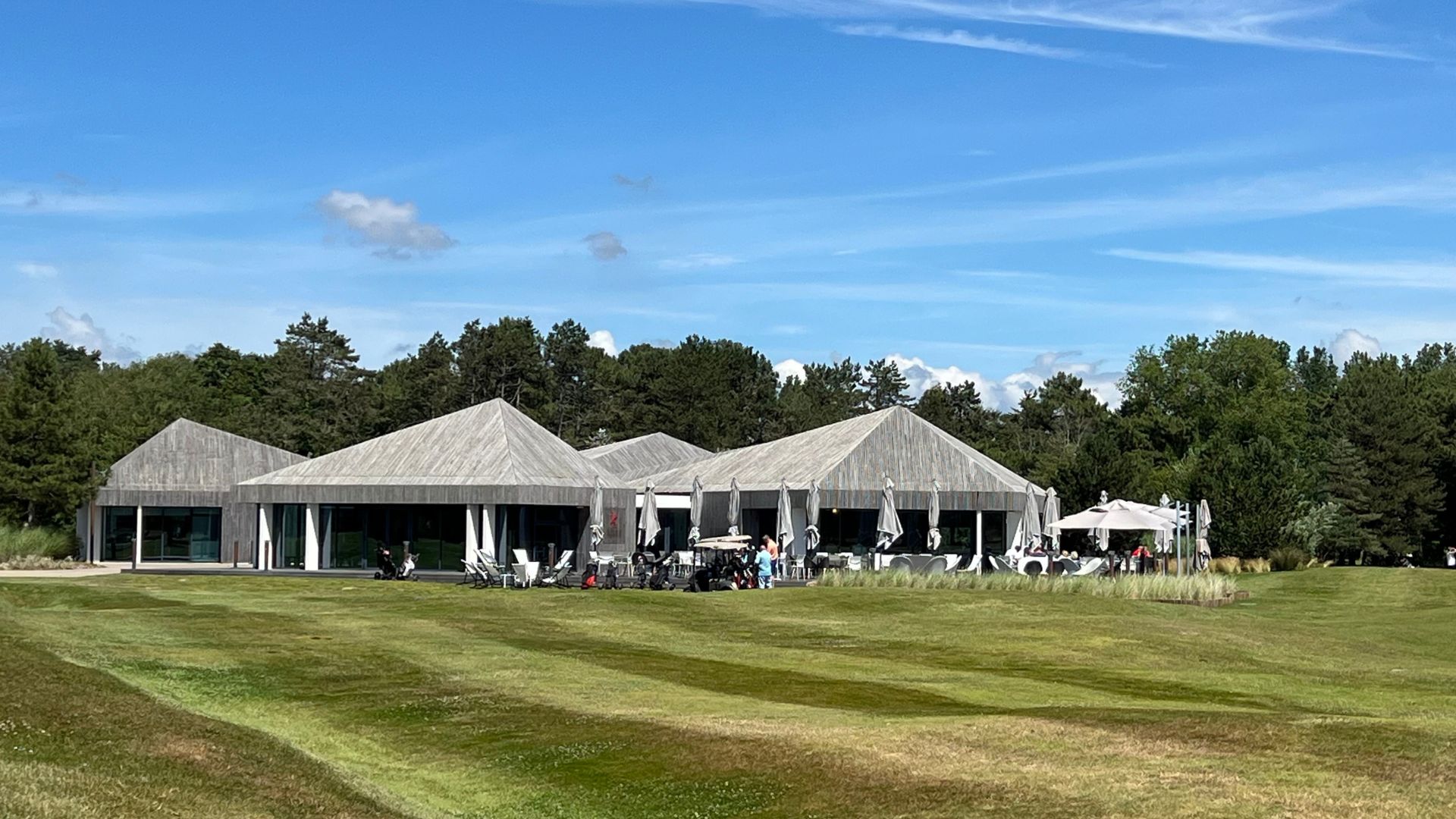
The stylish clubhouse, built in 2017, is worth a visit in its own right. It impresses with its open, light-flooded design. On the spacious terrace of the ‘Le Spoon’ brasserie, we not only enjoy the delicious lunch menu, but also the views over the extensive, open grounds.
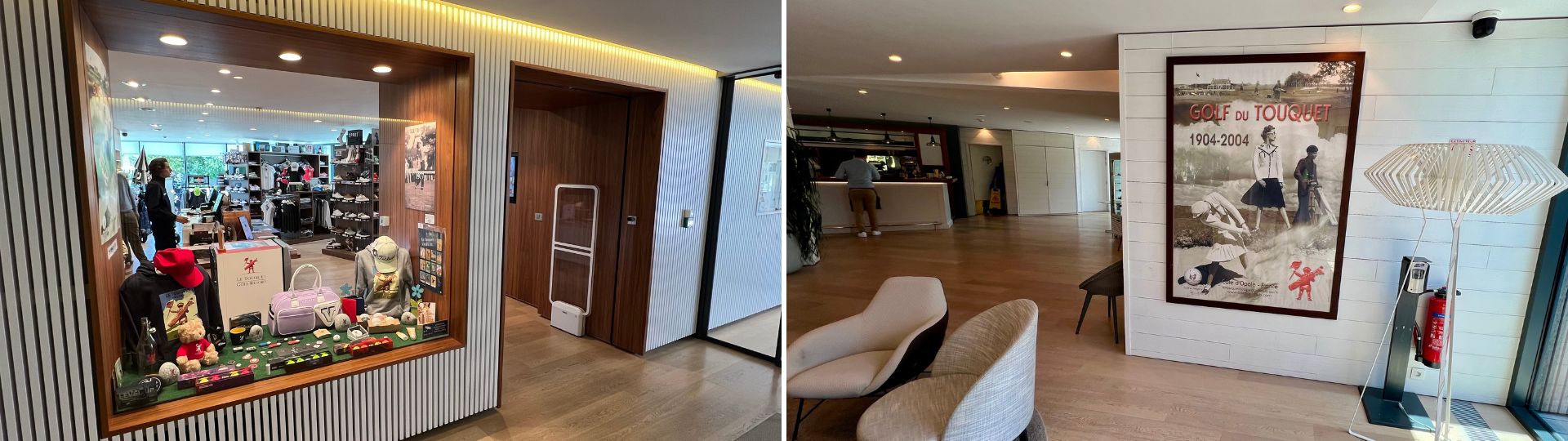
The pro shop, the bar, its lounge area and the locker rooms are also extremely inviting. Numerous posters and photos are a reminder of the club’s long history.
Le Manoir Hôtel
The 4-star boutique hotel is part of the Resonance Golf Collection and is located directly opposite the clubhouse, separated only by the Avenue du Golf. Its origins date back to 1911, when it was built as a family residence for one of the founders of Golf du Touquet.
Since 1950, the Anglo-Norman style building has served as a golf clubhouse. It was extensively renovated in 2017 without losing any of its original charm.
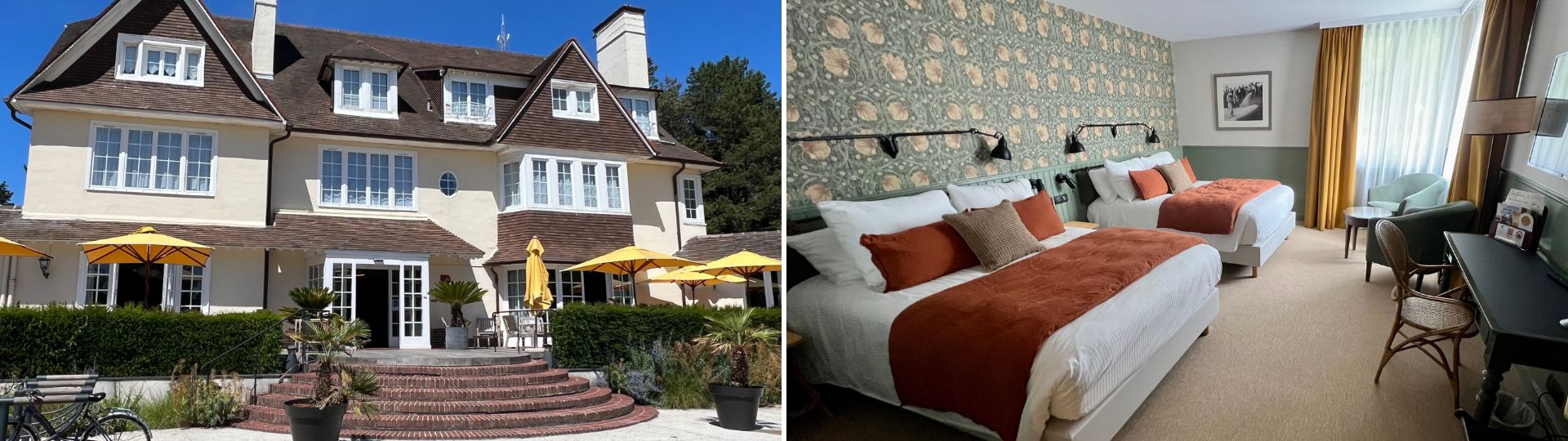
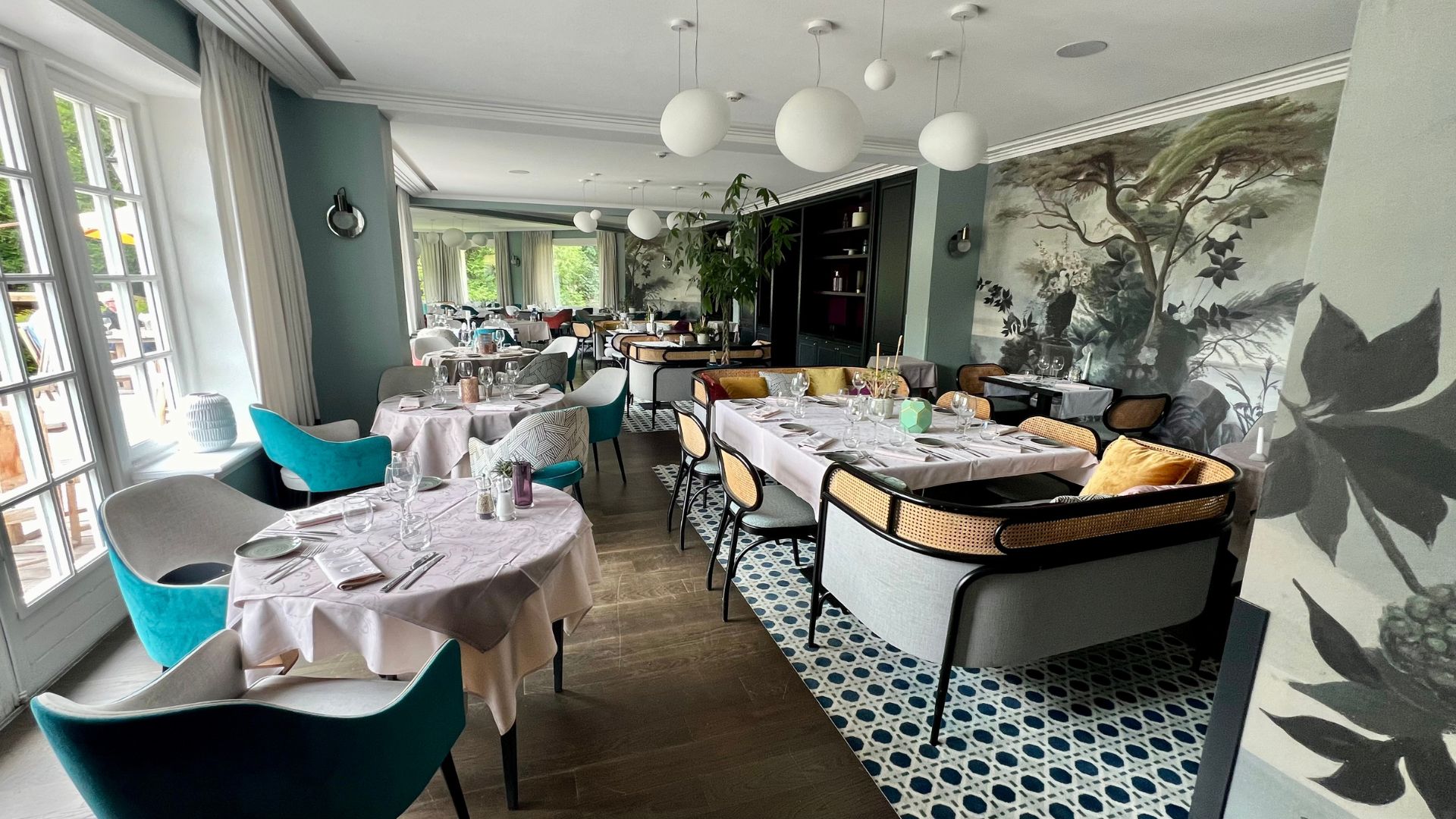
The 41 cosy, spacious rooms offer a choice of different categories. These range from the 24 square metre Classic Room to the 57 square metre Grande Suite. It has a spacious bar with lounge and a swimming pool. In the restaurant ‘La Table de Manoir’ we are spoilt with excellent French cuisine. Guests receive a 30% discount on green fees.
British golfing groups come to the resort in large numbers, especially after the opening of the Eurotunnel. It is less than an hour from Calais to the first tee. German golfers are still in the minority, even though it only takes four hours e.g. from Cologne by car to get here.
Everything the sea has to offer
Le Touquet also offers the finest dining options. Oyster and shellfish lovers are spoilt for choice with a variety of restaurants offering these delicacies from the sea. These range from simple street vendors to Michelin-starred restaurants.
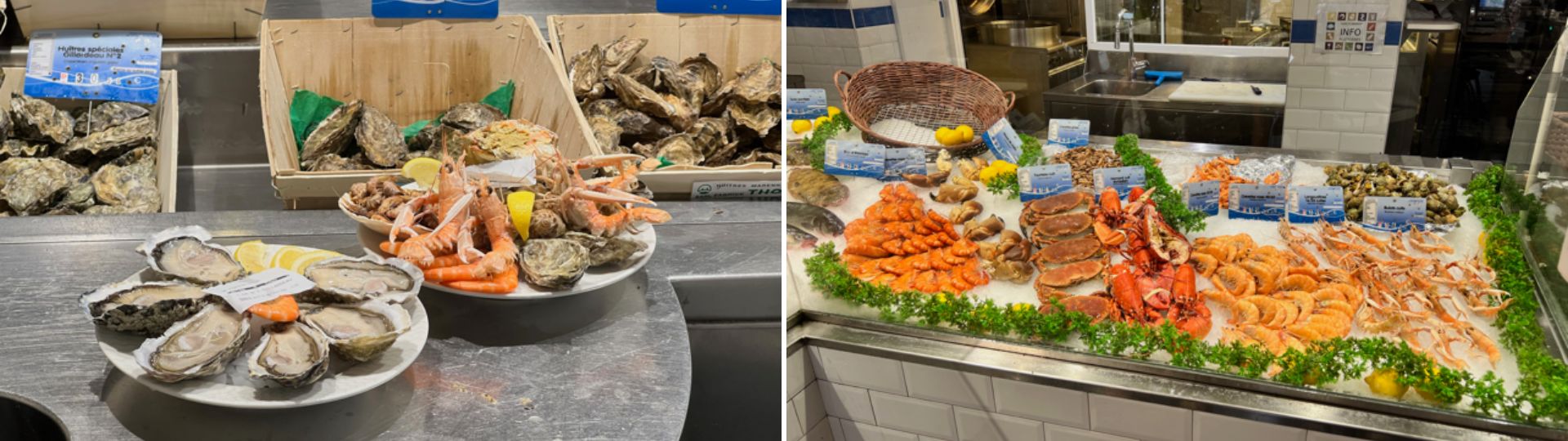
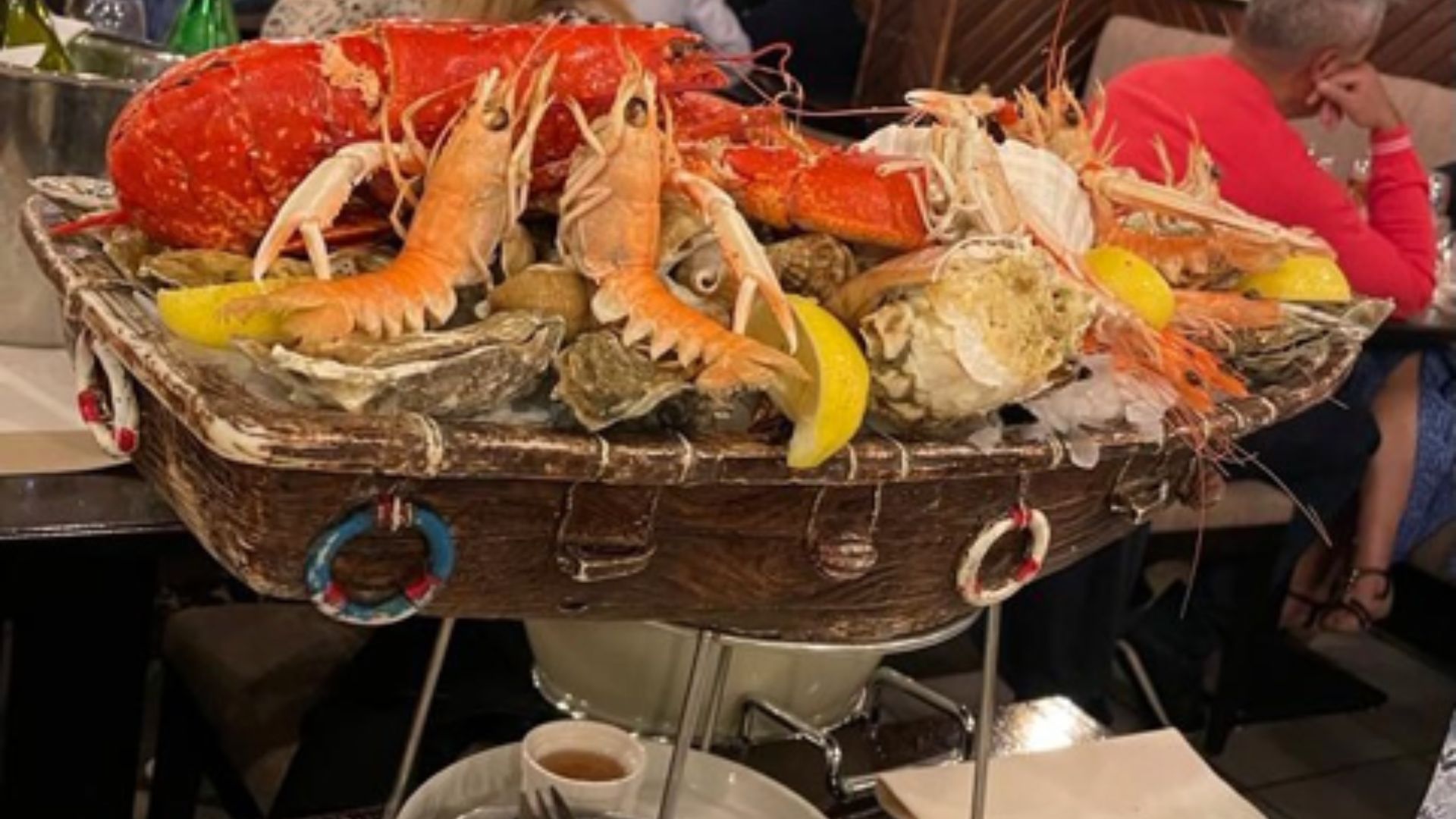
In the popular restaurant PERARD, we meet a nice British couple who have made the short journey here through the Eurotunnel on their wedding day. There in the morning and back in the evening. The crustacean platter Le Plateau Prestige leaves nothing to be desired and is well worth the day trip. We chat about golf and enjoy the excellent seafood together: Á votre santé et bon appétit.
Juergen Linnenbuerger
August 2024

