Latest movements in the Official World Golf Ranking: Stephan Jaeger rises to 92nd, surpassing fellow German Matti Schmid.

Latest movements in the Official World Golf Ranking: Stephan Jaeger rises to 92nd, surpassing fellow German Matti Schmid.

Nicolai von Dellingshausen remains in the top 20 after round three of the Genesis Championship, while Max Kieffer drops back.

Michael Brennan holds the lead at -17 going into the final round of the Bank of Utah Championship, with Stephan Jaeger climbing the leaderboard.

Junghwan Lee secures his first DP World Tour victory at the Genesis Championship in South Korea, while Germans finish mid-field.

Michael Brennan rises from PGA Tour Americas to PGA Tour winner in just weeks. Stephan Jaeger also returns to form.

Scheffler’s junior tour, Woods’ OWGR plunge, DeChambeau’s AI coach, McIlroy at the Giant’s Causeway. The Back Nine.
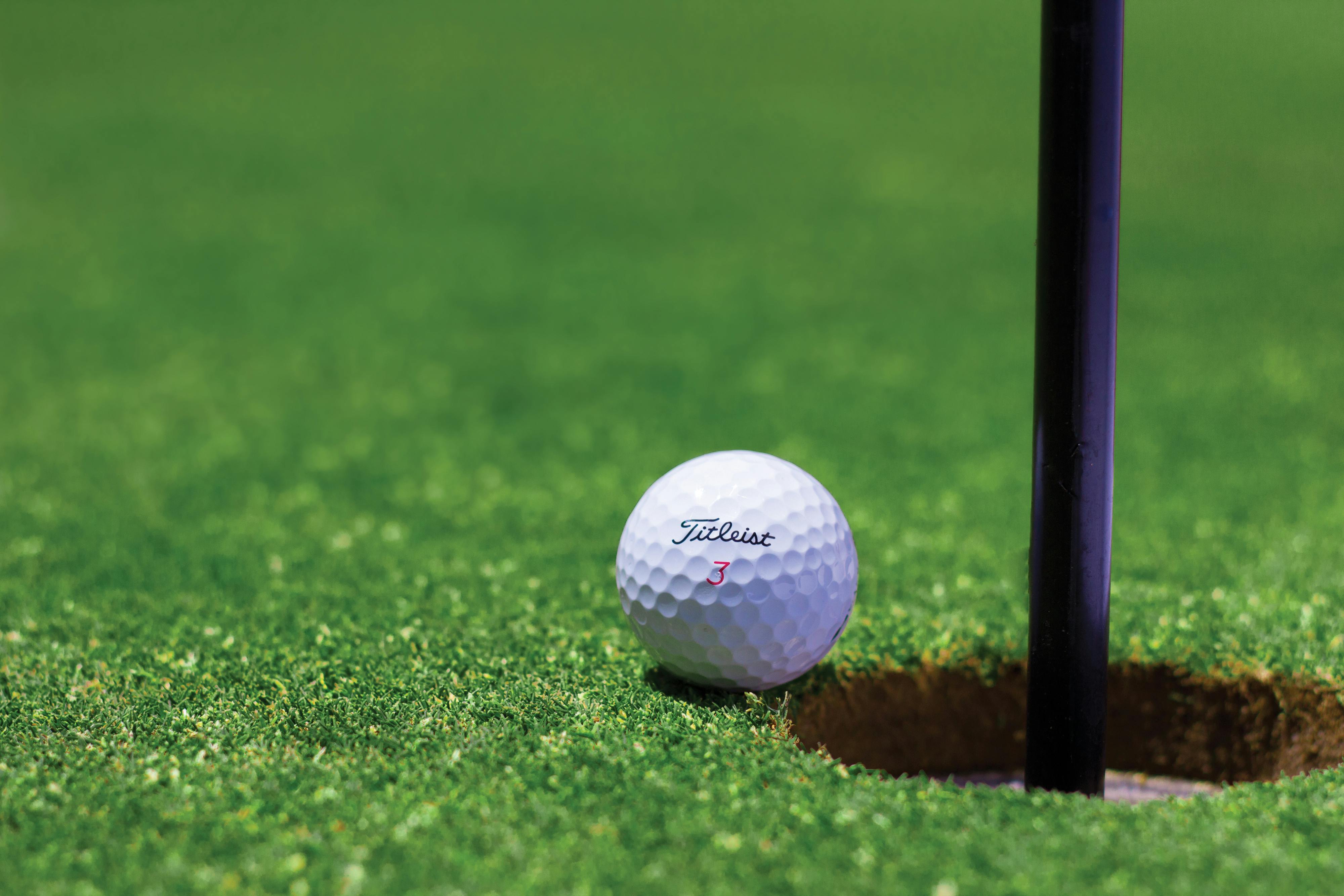
While golf continues on its steady drive to boost its global fan base, a new wave of sponsors is entering the clubhouse. Online casino operators are stepping up, and they are bringing funds, controversy and casino credibility to pro golf.
You may not imagine that an unmoving fairway and a high-stakes online roulette table would have much in common. But lately, the online gambling and golf worlds have started to overlap in interesting and extremely profitable ways. From sponsorships of major tournaments to flashy logos on golfers’ polo shirts, online casino firms are leaving their imprint on golf like never before.
It’s an unusual coupling on the surface, but once you delve underneath the dynamics; audience demographics, marketing aims and the shifting stance toward gambling in sport, it all makes sense. So, why are online casino brands lining up to sponsor professional golfers and tournaments now? And what does it mean for the sport moving forward?
To understand the allure, start with numbers. Golf has a loyal, affluent and increasingly global audience. It draws eyeballs from North America, Europe, Asia and beyond. And unlike other sports, golf television coverage goes on for hours, think wall-to-wall weekend coverage, especially for majors. That’s a goldmine of brand exposure.
Online casino operators, especially those keen on breaking into regulated markets like the U.S. and Canada, see golf as a low-risk, high-class way of getting in front of potential customers. Golf doesn’t have the same reputation baggage as, say, combat sports or esports. Golf is squeaky clean, polished and attracts an audience that already knows its way around a betting slip.
We’re seeing operators like bet365 and Betway become increasingly visible in golf sponsorships. Bet365 partnered with the PGA Tour as an Official Betting Operator between 2022 and 2024 in markets such as the UK, Ireland, Australia, and Canada, while Betway sponsors the Big Easy Tour in South Africa.
For the fans who are both golf aficionados and recreational bettors, websites like Bonuses.com are also playing a key role. These sites pair users up with exclusive promotions at a wide range of online casinos and sportsbooks, making it easy to review new offers and bonuses without needing to sift through many individual sites.
What’s notable is the way these sites are cleverly linking with sports content. A few even offer golf betting guides, odds trackers or promo codes linked to significant events such as The Masters or the Ryder Cup. The distinction between fan and player is becoming thinner, and a few fans are okay with that.
It’s not even tournament signage alone. Increasingly, the companies are sponsoring players. And the amounts of money they’re paying are not chump change.
Take a look at the shirts and bags next time you’re watching a tournament, those logos might belong to casino and sportsbook operators rather than the usual golf brands.
In some cases, casino brands are using the sponsorships as part of a broader sports marketing push. It’s not just golf, they’re going after soccer, MMA, tennis and even Formula 1. But there’s something about golf that fits their image. Maybe it’s the sophistication, maybe it’s the slow-burn drama. Whatever the case, casino brands want in.
Of course, it’s not all smooth sailing. Golf’s relationship with gambling is still evolving, and for some, the fact that online casinos are involved with the sport raises eyebrows.
The PGA Tour only officially embraced gambling in recent years, as state-level legalization in the U.S. opened the floodgates. But the Tour is also mindful of its image. You’re unlikely to see a sportsbook title sponsor a PGA event just yet, but that doesn’t mean they aren’t involved behind the scenes.
There is a balance to be found here. On one hand, casino gambling and sports wagering are more mainstream now, especially among younger fans. On the other, concern over gambling addiction, integrity issues and the tone it sets for a sport that’s long been proud of honor and sportsmanship still lingers.
With that said, most operators are incorporating responsible gambling messaging and are working under strict advertising guidelines.
So, where is all of this headed? Larger deals are coming. As regulations fall into place in the United States and markets open up overseas, online casinos will only continue to invest in sports marketing, and golf is a sure bet. Expect additional player sponsorships, additional subtle integrations during broadcasts and possibly even the first casino-sponsored event within three years.
Nevertheless, balance will be the key. Golf is not looking to sell its soul for a quick buck. The best scenario? Tasteful, respectful sponsorships underwriting the game’s growth without turning each tee box into a casino billboard.
Golf has always been a game of precision, patience and risk management, which, ironically enough, makes golf the perfect metaphor for this new trend of sponsorships. The online casino world thinks it has discovered an enormous opportunity in golf, and so far, they’re approaching it wisely, targeting the right constituencies and spending in the right places.
To fans, that might just mean more purse money, better broadcasts and some fun promotions on the side. As long as the game doesn’t lose its integrity, this might be the rare instance where the house doesn’t always win, but a smile is given to everyone.

Motocaddy, the world’s leading golf trolley brand, introduces the innovative QB2 Push Trolley, a groundbreaking model that combines compact design, smart features, and intuitive operation. With its sporty elegance and maximum functionality, the QB2 takes the on-course experience to the next level.
“The demands on push trolleys differ significantly from those of electric models. With the QB2, we’ve created a product specifically for golfers who value maximum usability and mobility,” explains Thorsten Kück, Managing Director of Motocaddy EMEA GmbH. “The sleek, sporty design of the 2025 model is combined with premium build quality. The launch of the QB2 is further proof of our drive for innovation and our commitment to providing golfers with products that genuinely enhance their game.”
Motocaddy has long been the best-selling trolley brand in Germany, with the award-winning CUBE leading the way in the push trolley segment. The new QB2 takes the range to a new level and reaffirms Motocaddy’s leadership in quality, design, and innovation.
The Motocaddy QB2 Push Trolley is available now at an RRP of €249.99 in four stylish color options: Blue, Graphite, Lime, and Red.
(Text: Motocaddy)

The 2025 golf major season unfurled as a testament to every kind of greatness. Rory McIlroy, dogged by over a decade of heartbreak, finally slipped into the Green Jacket at Augusta, exorcising demons 14 years in the making. At Pinehurst, J.J. Spaun put on a US Open clinic, transforming quiet confidence into a star-making, razor-sharp victory. Scottie Scheffler, meanwhile, rubber-stamped his status as the finest golfer on the planet as he swept both the PGA and Open Championships to re-establish his place at golf’s summit.
Even though the major season has now drawn to a close, there is still plenty to look forward to throughout the rest of the year. The headliner is without question the Ryder Cup, a tournament that online golf betting sites are already salivating at the prospect of.
The Europe vs USA showdown has already been priced up by online golf betting sites, and they make the Americans a 4/5 favorite to retain their crown, with the Europeans out at 6/4.
And yet, for all the spectacle of surging youth in recent times, the modern era of men’s golf has delivered plenty of moments where wily veterans roll back the years and upset the odds. Let’s take a look at the oldest players to claim a major title since the turn of the millennium, and the performance they put on to steal the show one last time.
Phil Mickelson – 50 years, 11 months
When Phil Mickelson teed it up on the wind-lashed Ocean Course to contest the 2021 PGA Championship, the numbers offered little hope: zero majors in eight years, a world ranking outside the top 100, and, at 50 years, 11 months, an age that in golf often marks admiring retirements, not new chapters. But nobody scripted what happened next.
Mickelson attacked Kiawah’s brutal stretches with absolute conviction. He averaged 305.3 yards off the tee, outdriving younger stars like Brooks Koepka and Louis Oosthuizen. His scrambling—saving par on 73% of missed greens—was among the best in the field. Under relentless pressure on Sunday, Mickelson nearly lost the lead on the front nine, only to respond with two brilliant birdies at 10 and 16, the latter capped by the unforgettable image of swarming fans cresting the fairway.
The final tally: Mickelson closed with a 73 for a two-shot victory, claiming a sixth major and smashing Julius Boros’s all-time age record by more than two years. This was no nostalgia trip, but a masterclass from an all-time great.
Tiger Woods – 43 years, 3 months
One Sunday in April 2019, Augusta didn’t just tremble—it thundered, as Tiger Woods delivered what might be the ultimate resurrection in sports. After a decade of public pain—four back surgeries, personal struggles, and 11 years since his last major—Woods, at 43 years, 3 months, didn’t just compete; he conquered at the Masters.
The post-tournament breakdown revealed Woods’ tactical edge: a driving accuracy of 71.4%, and, perhaps more crucially, a calm that infected his play as younger leaders faltered. On Sunday’s back nine, the famed “Tiger Roar” arrived as he birdied 13, 15, and 16, methodically dismantling Francesco Molinari and company. He needed only a bogey to capture his 15th major, clutching his son in an emotional coda that echoed his famous 1997 win.
Darren Clarke – 42 years, 11 months
Darren Clarke’s emotional Open Championship win didn’t just break his major duck—it ignited a wave of joy through golf’s tightest-knit fraternity. Approaching 43, Clarke entered as a 200-1 outsider, a nearly man with over 50 major starts and more rain delays than playoff successes.
But Clarke’s arsenal—laser-precise ball striking, unmatched links savvy, and veteran patience—gave him a rare advantage over the field. He hit 71% of fairways and 70% of greens in regulation, minimizing damage when swirling English winds punished the careless. While rivals wilted, Clarke posted just three bogeys in his last 27 holes. He grasped victory by three strokes, his closing stretch a study in measured aggression and steely resolve.
No win resonated more with the golf public that decade: Clarke, cigar in hand, hoisting the Claret Jug, was the embodiment of perseverance finally paid off—a celebration for every late bloomer who dares to persist.
Ernie Els – 42 years, 7 months
Ernie Els’ second Claret Jug is the stuff of sporting fable, its dramatic arc made all the sharper by the numbers. At 42 years, 7 months, and after a winless major stretch spanning an entire presidency, Els roared back.
Trailing for much of Sunday, The Big Easy delivered under maximum pressure. His back nine consisted of four birdies, culminating in a 15-foot stunner at the 18th, just as Adam Scott collapsed with four closing bogeys. Els’ 68 to Scott’s 75 was a turnaround for the ages. What made it even more remarkable? Els had ranked outside the top 65 in strokes gained putting that season. His putter caught fire when he needed it most—a testament to the long view, the ability to draw on decades of facing down adversity.
With four majors now to his name, Els didn’t just restore his place in golf’s elite; he proved that resilience, as much as talent, is a champion’s greatest club.

Understanding etiquette is crucial whether you’re teeing off on a golf course or logging into an online casino. Respectful behavior enhances enjoyment and ensures a positive experience for everyone involved. Both golfing and gaming communities value adherence to unwritten rules of conduct.