
The point of contact between ball and clubface is crucial. Learn how Gear Effect influences your shots and gear.
At HoleInOne Fitting, we work with golfers of all skill levels—from beginners to seasoned players. One common issue we see: many golfers don’t understand why their shots suddenly veer off to the right or left. Understanding this is key to controlling ball flight. Even the best club can only perform if you understand your weaknesses. One often overlooked factor is the Gear Effect.
What is the Gear Effect?
Many golfers blame slices or hooks on open or closed clubfaces at impact. But often, the Gear Effect is the real culprit. It occurs when the ball is struck off-center—not in the sweet spot of the clubface.
How Gear Effect Is Created
Striking the ball toward the toe causes the clubhead to twist open slightly, as its center of gravity is more inward. This results in counter-spin and often a stronger draw. Conversely, heel strikes create slice spin, especially when the shaft is too short, increasing heel contact.
Vertically, Gear Effect also plays a role:
• Low-face strikes: the club tilts forward, launching the ball lower with more backspin and less distance.
• High-face strikes: higher launch angle, less spin, and again, loss of distance.
The Gear Effect is most noticeable with drivers due to the larger distance between clubface center and center of gravity, but it also affects fairway woods and hybrids.
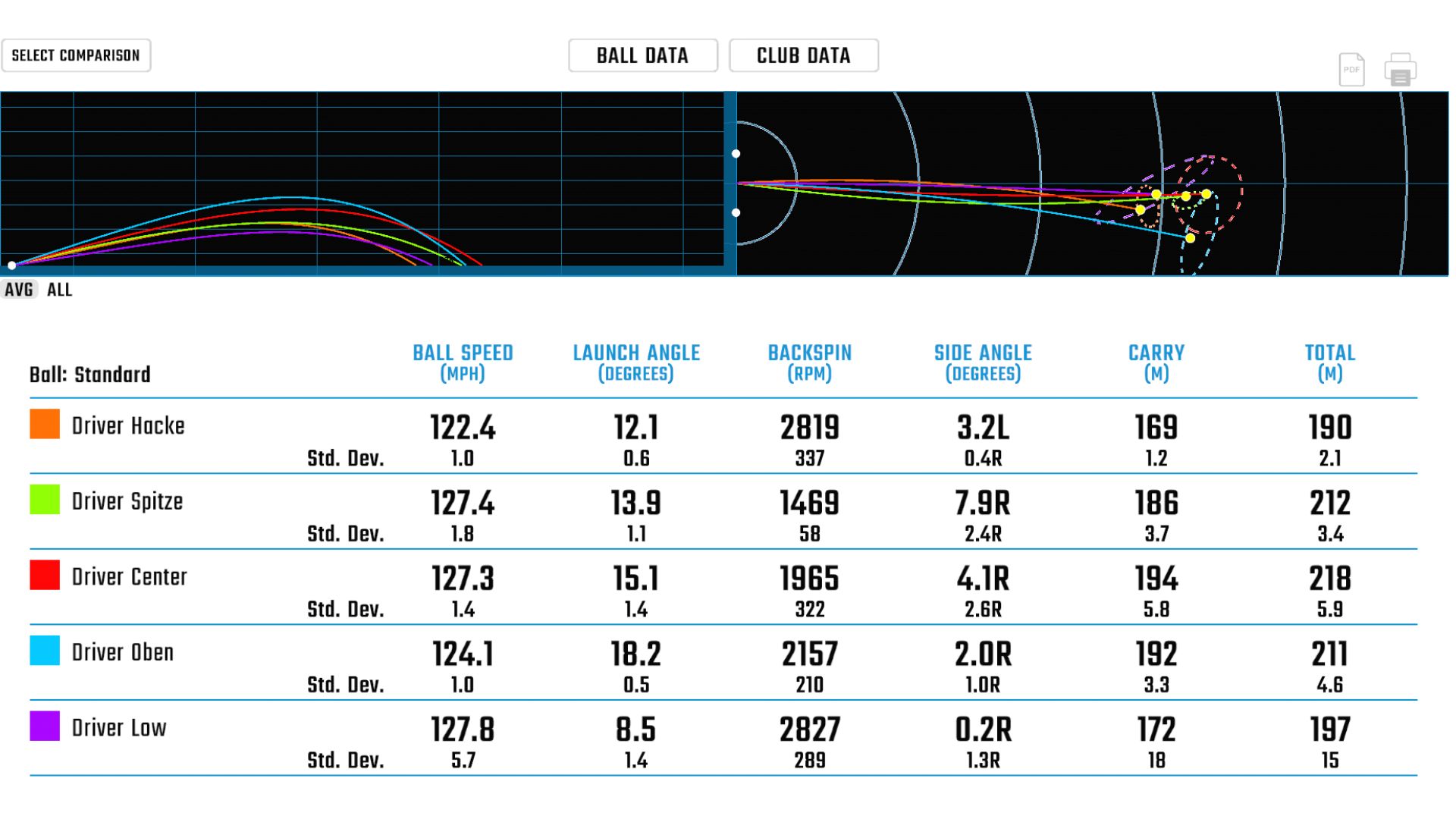
Gear Effect chart (Photo: HIO Fitting)
How Club Technology Compensates
To counteract Gear Effect, modern drivers feature curved clubfaces—a design known as “Bulge and Roll.” This curvature helps shots struck on the toe start right but curve back toward center thanks to Gear Effect.
Manufacturers also use strategic weight placement in the clubhead to influence or minimize Gear Effect.
The Importance of Proper Club Fitting
Where the ball strikes the clubface significantly affects direction, spin, and distance. Fitting sessions use precise sensors to analyze impact points, helping find the ideal head and shaft combination tailored to swing behavior and desired ball flight. Forgiveness and inertia of the clubhead are key factors.