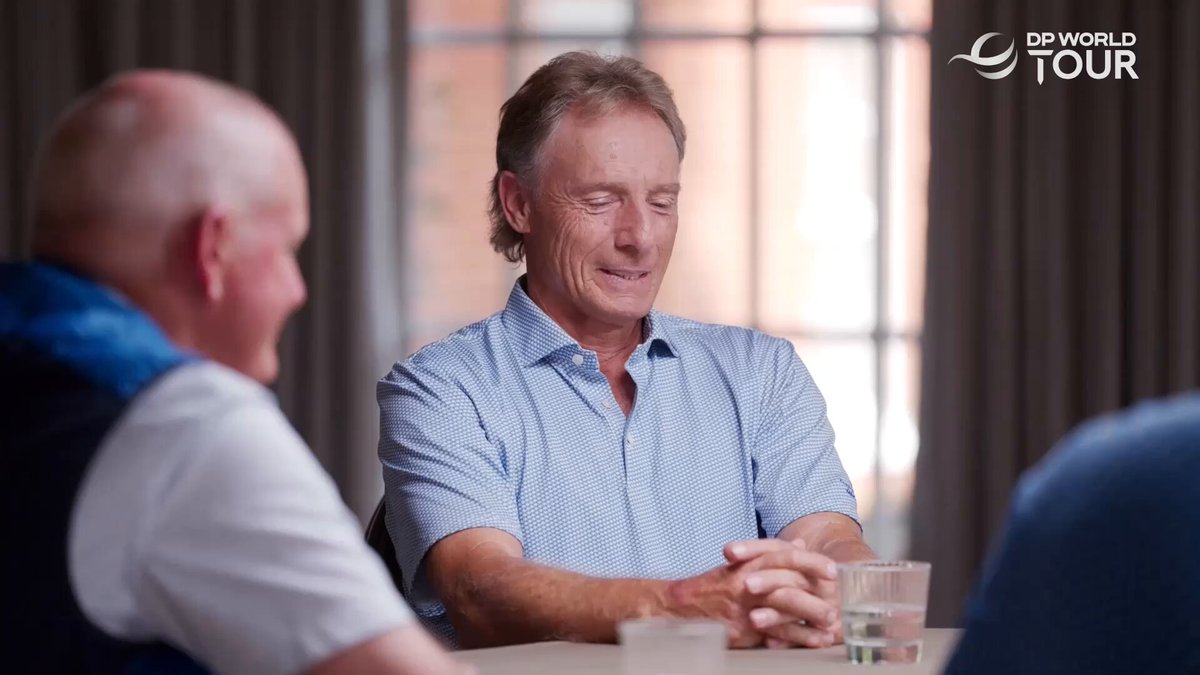
A legendary golfer reflects on his contrasting Masters triumphs, from a dramatic comeback to a dominant performance.
Winning a major championship once is a lifetime achievement for most golfers. Winning multiple majors requires exceptional skill, mental fortitude, and sometimes a healthy dose of good fortune. In a candid reflection shared by the DP World Tour, a two-time Masters champion detailed how his two victories at Augusta National were shaped by dramatically different circumstances and approaches.
The 1985 Triumph: Taking a Calculated Risk
The first Masters victory came in 1985, and it was anything but straightforward. After two rounds, the champion made a bold decision that would define his week: he changed his entire set of irons. This wasn’t a typical move for a professional golfer in the middle of a major championship.
“I usually don’t have a backup set of irons,” he explained, “but I probably ordered one for the future, and I thought well, bring them to Augusta and hit them and see how they go.” The gamble paid off, despite the risk involved in introducing new equipment mid-tournament. His iron game improved dramatically, and the change positioned him for the dramatic finale that would follow.
The breakthrough moment came on Saturday at the par-5 13th hole, where fortune intervened in spectacular fashion. Standing six shots behind the leader, the champion needed to make birdie to remain in contention. With a difficult lie ahead, he and his caddie Kristin Coleman made what he described as a “stupid decision”—hitting a 3-wood from a position that seemed impossible.
“It got about this high off the ground the whole time, just going like a bullet, heading for a raised creek,” he recalled. The ball hit the upslope of a small knob in front of the creek, bounced over the water hazard, and landed on the green. He then made a 30 to 40-foot putt for an eagle. “Biggest break I can remember in my life,” he admitted. That miraculous sequence, combined with subsequent birdies, brought him to within two shots entering Sunday.
The Final Round Drama and Seve’s Blessing
Sunday’s finale featured one of the most memorable pairings in Masters history. The champion played alongside Seve Ballesteros, who was competing against American players Curtis Strange and Raymond Floyd. Before they teed off, Seve made his intentions clear: “Let’s make sure one of us wins, not these two Yankees behind us.”
That competitive spirit extended to the closing holes. When the champion reached the 17th tee, he was trailing by four shots. But over the next eight holes, he birdied five of them while Curtis Strange encountered trouble. After making birdie at 17, he had turned a four-shot deficit into a two-shot lead. As they walked off the green, Seve approached him one final time, placing a hand on his shoulder.
“This is your time to win,” Seve said. “You’re going to be a major champion. You deserve this one.”
Those words proved prophetic. The champion navigated the treacherous 18th hole—”one of the hardest par 4s in the world of golf under the circumstances”—and secured his first green jacket. The celebration was intimate and heartfelt: a hug for his caddie Coleman, and then straight to embrace his wife.
Eight years later in 1993, his second Masters victory told an entirely different story. This time, he arrived at Augusta National in command, holding a four-shot lead entering Sunday. But as he noted, “four shots can go in two holes.” Indeed, his lead evaporated to just one shot by the 10th hole, with Dan Forsman and Chip Beck as his closest pursuers.
Forsman’s fate sealed itself on the par-3 12th when he hit two shots into the water, effectively removing him from contention. The champion’s focus shifted to Beck, his playing partner. The decisive moment came again at the 13th, where the champion hit a stunning 3-iron from a hanging lie. Beck was already positioned 20 feet away with an eagle putt. The champion’s shot found the green closer still, and when Beck missed his eagle try, the champion made his birdie to extend his lead decisively.
“The 2 or 3 best shots I’ve hit in concession were again on 13, that par 5,” he reflected. He played the back nine brilliantly and won by four shots, allowing him to savor the victory on 18 with a commanding lead. “It’s nice to enjoy the standing ovation and truly let it soak in,” he concluded.
These two contrasting victories—one built on audacity and good fortune, the other on dominance and control—perfectly illustrate the different paths to success in professional golf.
This article was created with the help of AI and editorially reviewed. Report an issue