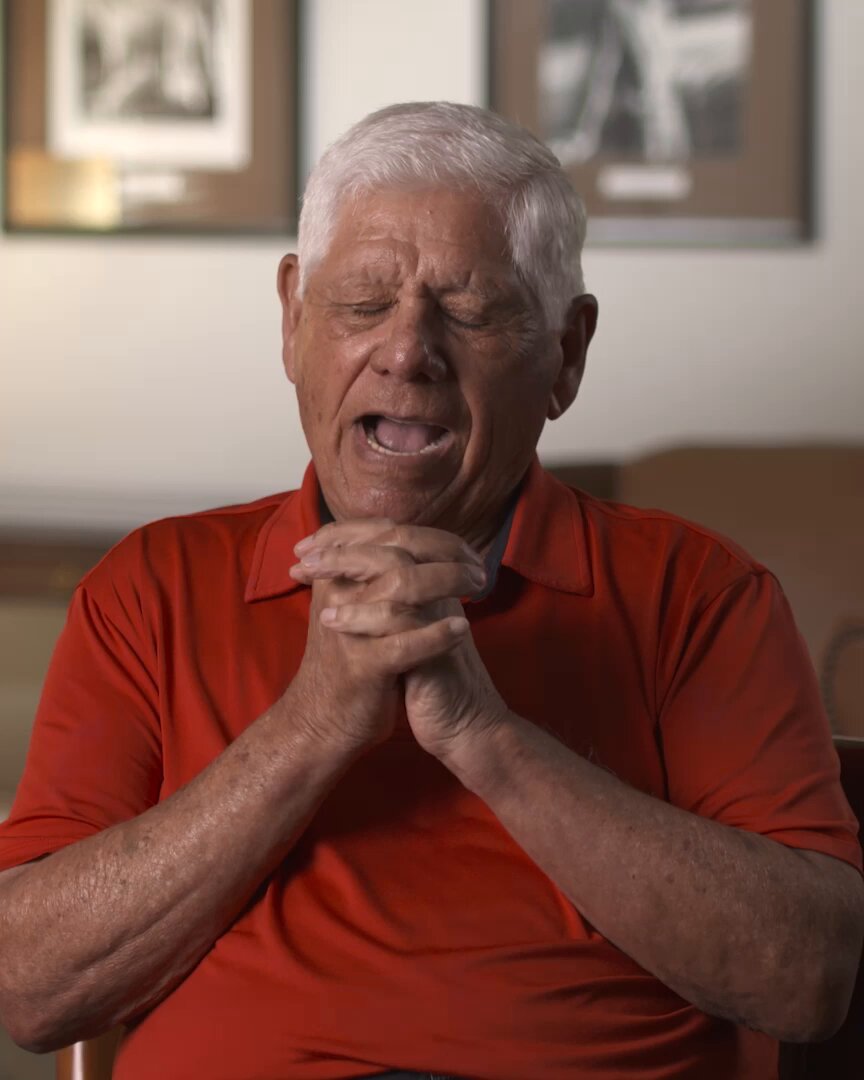
Golf legend Lee Trevino reflects on Rory McIlroy’s dramatic Masters victory and the emotional journey of winning his first major.
Lee Trevino, one of golf’s greatest champions, offered a remarkable tribute to Rory McIlroy‘s 2025 Masters triumph, calling it “the greatest Masters I’ve ever seen, and I’ve watched them all.” The Hall of Famer’s detailed reflection on McIlroy’s dramatic victory provides insight into the championship’s defining moments and the significance of the win.
The Drama of Augusta’s Back Nine
Trevino dissected the pivotal moments that defined McIlroy’s victory, particularly the chaotic sequence on holes 13 and 14 that threatened to derail the Northern Irishman’s challenge. According to Trevino, McIlroy’s third shot at the 13th hole—which found the creek—was shocking to witness. “I think he was in shock just as much as everybody who’s a fan that watched the telecast was in shock,” Trevino recalled.
The subsequent bogey at the 14th hole appeared to signal a collapse, yet McIlroy responded with remarkable composure. Trevino was particularly impressed by the seven-iron high draw into the 15th green, a shot he described as “one of the most incredible shots you could ever play, especially in that situation.” After watching that recovery, Trevino told his wife: “He’s OK. He’s OK.”
The 17th hole proved crucial in McIlroy’s path to victory. With a three-wood off the tee and 162 yards remaining, McIlroy played what Trevino called a “magnificent” second shot. The ball landed short of the flag and rolled up to set up the crucial putt that gave McIlroy a one-shot lead entering the final hole.
Mistakes and Redemption
The final hole revealed more complications. McIlroy’s tee shot found the fairway, but his approach wedge strayed into the bunker—another in a series of errors throughout the championship. Yet his recovery was textbook golf. “He plays a beautiful bunker shot, and then misses a short putt,” Trevino noted, adding that McIlroy was “totally deflated” after the miss.
The ensuing playoff with Justin Thomas showcased McIlroy’s resilience. While Thomas drove perfectly, McIlroy’s wedge approach settled to within three-and-a-half to four feet, leaving him with a crucial putt to secure the championship.
“Not many guys in the field, probably none, could have made that many mistakes and won the golf tournament,” Trevino emphasized. McIlroy’s overall talent and composure under pressure ultimately overcame the errors that might have defeated lesser competitors.
A Grand Slam Achievement
Beyond the tactical golf analysis, Trevino offered personal perspective on the magnitude of McIlroy’s breakthrough. The victory completed McIlroy’s career Grand Slam, making him the sixth man in history to achieve the feat—and the first from Ireland to do so.
“Knowing how much he wanted that Grand Slam, and I can sit here and comfortably say he deserved that Grand Slam because of how good he is, to watch him at Augusta was almost like watching my own two boys play,” Trevino said with evident emotion. The legendary golfer acknowledged McIlroy’s elevation to rarified air within professional golf. “He’s reached a level in our sport that very few people ever attain.”
Trevino praised the tournament itself, noting that he’d “never seen a Masters gallery so excited,” and admitted: “I never pull so hard for somebody in my life because he’s a hell of a guy.” He emphasized that McIlroy’s success was not only good for the player but “great for golf.”
As McIlroy prepares to join the Champions locker room, Trevino reflected on his admiration for the golfer’s journey. “It’s been a privilege for me to watch from the outside and see him do that,” Trevino concluded. “He’s a very talented and I still consider very young man. To finally break through like he did and watch the emotions that poured out of him—you know exactly what it meant.”
This article was created with the help of AI and editorially reviewed. Report an issue