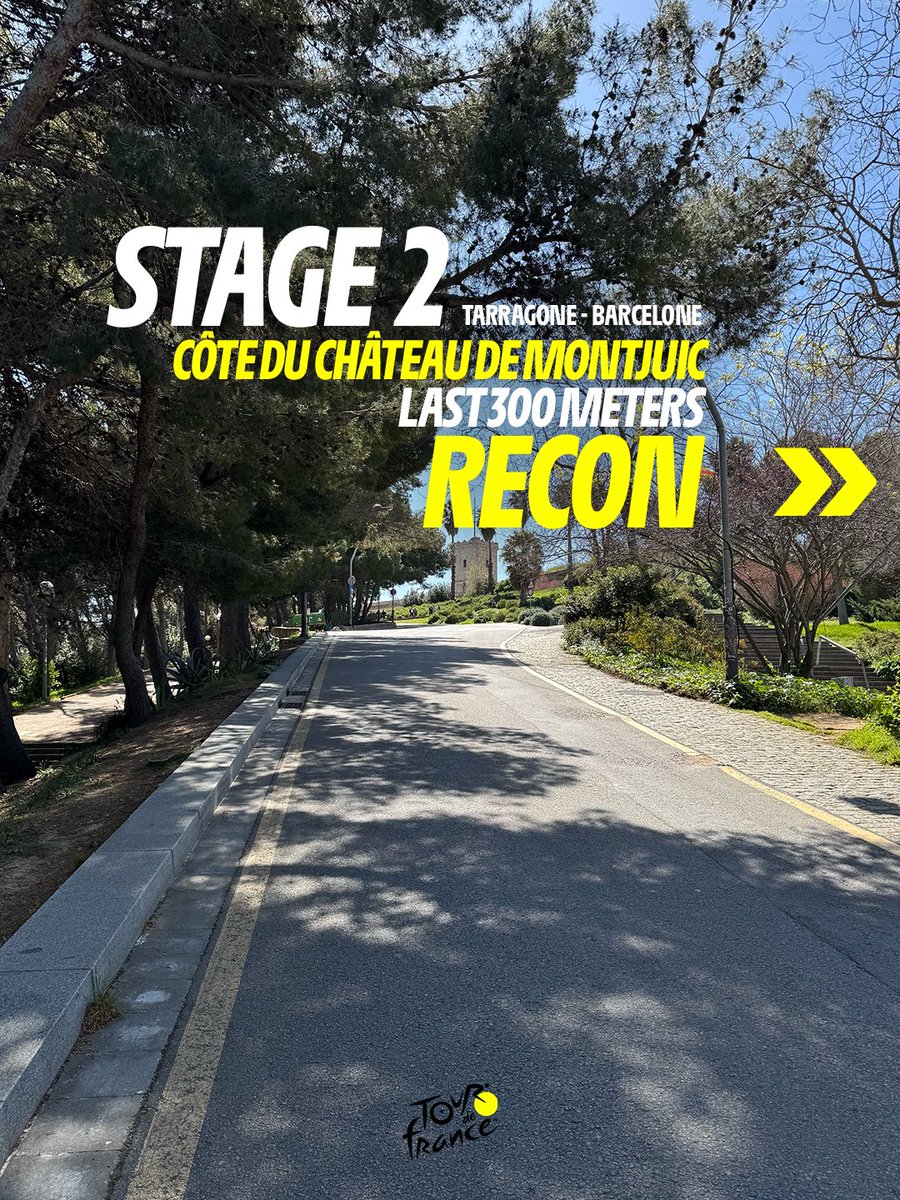
Tour de France 2026 stage 2 promises fierce battle on Barcelona’s iconic climbs. Riders face Montjuic three times with gradients reaching 14%.
The 2026 Tour de France is shaping up to be a thrilling spectacle, and stage 2 is already sending shockwaves through the professional peloton. Route reconnaissance has revealed that riders will tackle some of Barcelona’s most fearsome urban climbs, setting the stage for dramatic breakaways and crucial time gains before the race even hits the mountains.
Montjuic: The Three-Time Challenge
The Côte du Château de Montjuic (1.6 km, 9.3% gradient) will be no gentle introduction to climbing. What makes this climb particularly treacherous is its triple ascent during stage 2—each passage testing the legs and mental fortitude of the peloton. But the real sting lies in the finale: the final 300 meters ramp up to a staggering 14% gradient, a wall of pain that will separate the climbers from the domestiques and force decisive moves from contenders hunting for stage victory.
Early reconnaissance data shows that this is not a climb to be underestimated. Riders will need to manage their effort carefully across the three passages, as the cumulative effect of repeated ascents in an urban setting—with tight technical sections and minimal recovery—creates a unique tactical puzzle. The peloton’s strongest climbers and breakaway specialists will be eyeing this segment as a golden opportunity to build advantages or launch attacks that could define the entire stage outcome.
Stade Olympique: The Final Punctuation Mark
Following the brutal Montjuic repeats, the riders will face the Côte du Stade Olympique (600 m, 7% gradient), which they will also ascend three times. While technically easier than Montjuic, this 7% gradient still poses a formidable challenge when contested in the final kilometers of stage 2. The psychological impact cannot be overstated: by the time the peloton reaches the Stade Olympique for the third time, fatigue will be the greatest enemy.
This combination of repeated climbs transforms stage 2 into a genuine mountain stage compressed into an urban landscape. Teams will need to position their lead-out trains strategically, protecting their general classification contenders while supporting breakaway attempts. Climbers like Felix Grossschartner and other specialists from the DACH region will view this stage as a crucial opportunity to prove their worth in the mountains before the race moves toward the Alps and Pyrenees.
Strategic Implications for Teams
The route reconnaissance reveals a stage that rewards both aggression and tactical awareness. Teams with strong domestiques will aim to control the breakaway, while climber-focused squads may see stage 2 as their best chance for stage victory before the truly Alpine terrain arrives. The repeated climbs mean that pacing and energy management become critical factors—riders cannot simply empty the tank on the first ascent.
For breakaway artists, the Montjuic repeats offer an ideal launching pad. The urban setting and technical sections provide natural advantages for aggressive, lighter riders who excel in explosive climbing rather than sustained power output. This stage will likely feature tactical fireworks, with multiple breakaways forming and reforming as teams test each other’s resolve.
The 2026 Tour de France stage 2 promises to be unmissable. Barcelona’s iconic climbs will provide the peloton with an early test of form and determination—a perfect appetizer before the Grand Boucle truly reveals its mountains.
#TDF2026, stage 2 – Côte du château de Montjuic recon (1,6 km, 9,3%)
The riders will have to face it 3 times, with the last 300 meters being the steepest section: up to 14%!They will then ride towards the côte du Stade Olympique (600 m, 7%) for the third time as well, where the… pic.twitter.com/vaA6coU3nt
— Tour de France™ (@LeTour) March 26, 2026
This article was created with the help of AI and editorially reviewed. Report an issue