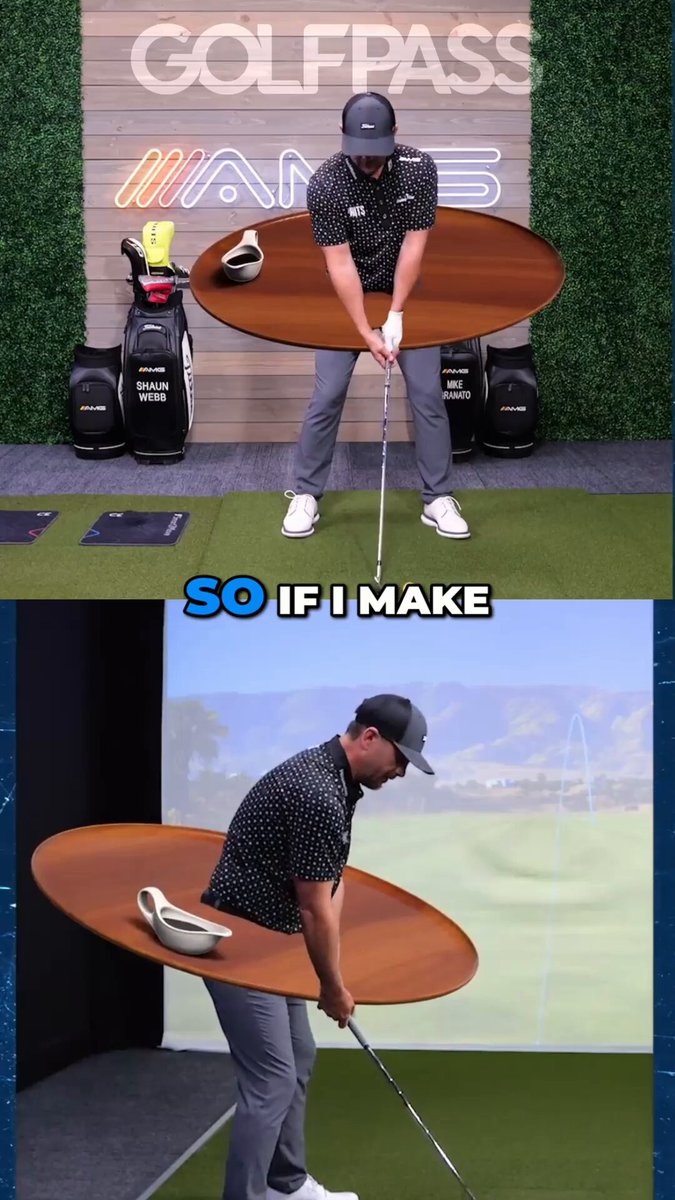
Shaft lean is considered essential for good ball-striking, but experts explain why amateur golfers often struggle with this advanced technique.
Shaft lean is frequently cited as a hallmark of elite ball-striking in professional golf. Yet Athletic Motion Golf’s Mike Granato and Shaun Webb have identified a critical caveat: what works brilliantly for world-class players like Rory McIlroy can backfire spectacularly for the average amateur golfer.
Understanding Shaft Lean
Shaft lean—the forward angle of the club shaft relative to the ball at address and through the impact zone—is undeniably important for professional golfers. When executed properly, it delofts the club, promotes a descending blow, and generates more compression through the ball. For players operating at the highest levels of professional golf, this forward shaft lean contributes to consistency, distance control, and the ability to shape shots with precision.
McIlroy, widely regarded as one of the most technically proficient players on the PGA Tour, exemplifies this technique. His efficient swing mechanics and exceptional shaft lean allow him to produce optimal contact patterns and competitive advantage week after week at major championships and tour events.
The Amateur Problem
However, Granato and Webb’s analysis highlights a massive difference between the technical demands placed on elite professionals and recreational golfers. When amateurs attempt to replicate excessive shaft lean without the foundational biomechanical capabilities of tour professionals, the results often prove counterproductive.
The issue stems from several factors:
- Amateurs frequently misinterpret what “shaft lean” means in practical terms, often creating tension and manipulative movements rather than natural swing mechanics
- Without the mobility, strength, and sequencing precision that professionals develop through years of specialized training, recreational golfers struggle to maintain proper positions through the golf swing
- Overemphasis on shaft lean at address can lead to compensatory movements that actually reduce consistency and increase injury risk
- The timing required to maximize shaft lean without losing control is beyond the practical capacity of most amateur swings
What Athletic Motion Golf emphasizes is that while shaft lean is indeed an essential characteristic of good ball-striking at the professional level, pursuing it as a standalone swing thought can misdirect amateur development. Instead of focusing narrowly on this single mechanical feature, recreational golfers benefit more from building a sound fundamental foundation that naturally produces appropriate shaft lean as a byproduct of correct sequencing and timing.
The lesson is clear: not every technical element that defines elite golf translates directly to amateur instruction. Sometimes the best path forward involves recognizing the difference between what the world’s best players do and what works most effectively for golfers developing their games outside the professional sphere.
'BAD' SHAFT LEAN? [RORY vs. AM]
This is always described as an essential trait of good ball-striking, but it can backfire, as Athletic Motion Golf's Mike Granato and Shaun Webb explain.MASSIVE difference between an amateur golfer and, say, Rory McIlroy… pic.twitter.com/2r1Mujj6JH
— GolfPass (@GOLFPASS) March 22, 2026
This article was created with the help of AI and editorially reviewed. Report an issue