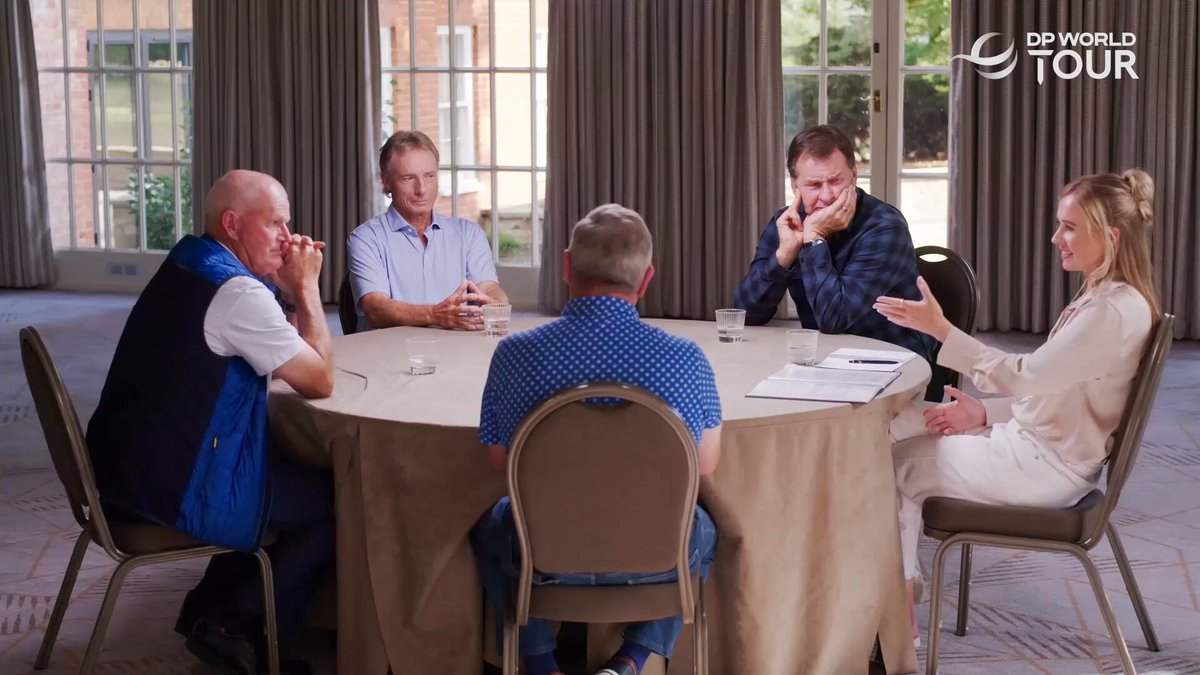
The 1988 Masters champion reflects on the exhausting four days leading the field and that crucial 18-foot putt that sealed his green jacket.
In a candid reflection on one of golf’s most memorable victories, Sandy Lyle has provided a detailed account of the mental and physical challenges that defined his 1988 Masters Tournament win at Augusta National.
Lyle spoke about the cumulative effect of competing at the highest level just days after his previous tournament victory. “I remember feeling very tired mentally,” he recalled. “Four days of sort of leading the tournament. I won the week before in Greensboro, so I had a lot of media attention that week. People forget that. To win two in a row is not always easy.”
The pressure intensified once the Masters began. Lyle explained how the tournament’s scheduling format—where players who score well early must play late in subsequent rounds—extended his ordeal. “I was late the third day and then was obviously last off with Crenshaw,” he noted. “Mentally it was getting quite tiring because the course was very dry. And it was just holding on because these four footers you keep getting, keep making them.”
The Momentum Shift Down the Back Nine
Despite taking a one-shot lead into the final holes, Lyle found himself chasing Mark Calcavecchia after difficult moments at the 11th and 12th holes. The momentum seemed to have shifted against him as he reached the crucial closing stretch.
“So now I was on the hunt to try and get that few shots back off Mark Calcavecchia,” Lyle said. “And it’d come at holes that I thought wouldn’t happen. I thought 13th I can maybe get a birdie. And I had a good tee shot. I had 165 for my second shot. To give you some idea how good the tee shot was. And I still made par, which was annoying.”
A missed birdie opportunity at the 14th from eight feet and another at the 15th compounded his frustration. “So I’m thinking, you know, the chances are gone a bit thin,” Lyle admitted.
The Final Holes and That Iconic Putt
Relief came at the 16th, where Lyle drained a birdie putt from above the hole. The 18th proved to be the defining moment. After finding the bunker off the tee, Lyle successfully escaped and faced a downhill putt for victory—the shot that would secure his place in Masters history.
“That was an 18 feet I think it was the putt,” Lyle explained. “It doesn’t look like it on TV. It looks like about 6 feet.” He credited the line-reading time afforded by waiting for his playing partner to finish before him, though he acknowledged this extra time created additional mental pressure.
“To me I’d had probably 10 minutes to read the line. I don’t know if it was a good thing or a bad thing. You get too many ideas in your mind because Crenshaw was butchering the hole at the time.” Ultimately, Lyle’s trust in his read was rewarded as the ball found the cup.
When asked about his famous celebration that followed, Lyle laughed at the memory of what was meant to be a somersault but ended up as a modest jig. “That was meant to be some sort of somersault but I’ve got no legs left,” he said with characteristic humility. “You couldn’t get airborne. No. Never got off the ground.”
This article was created with the help of AI and editorially reviewed. Report an issue