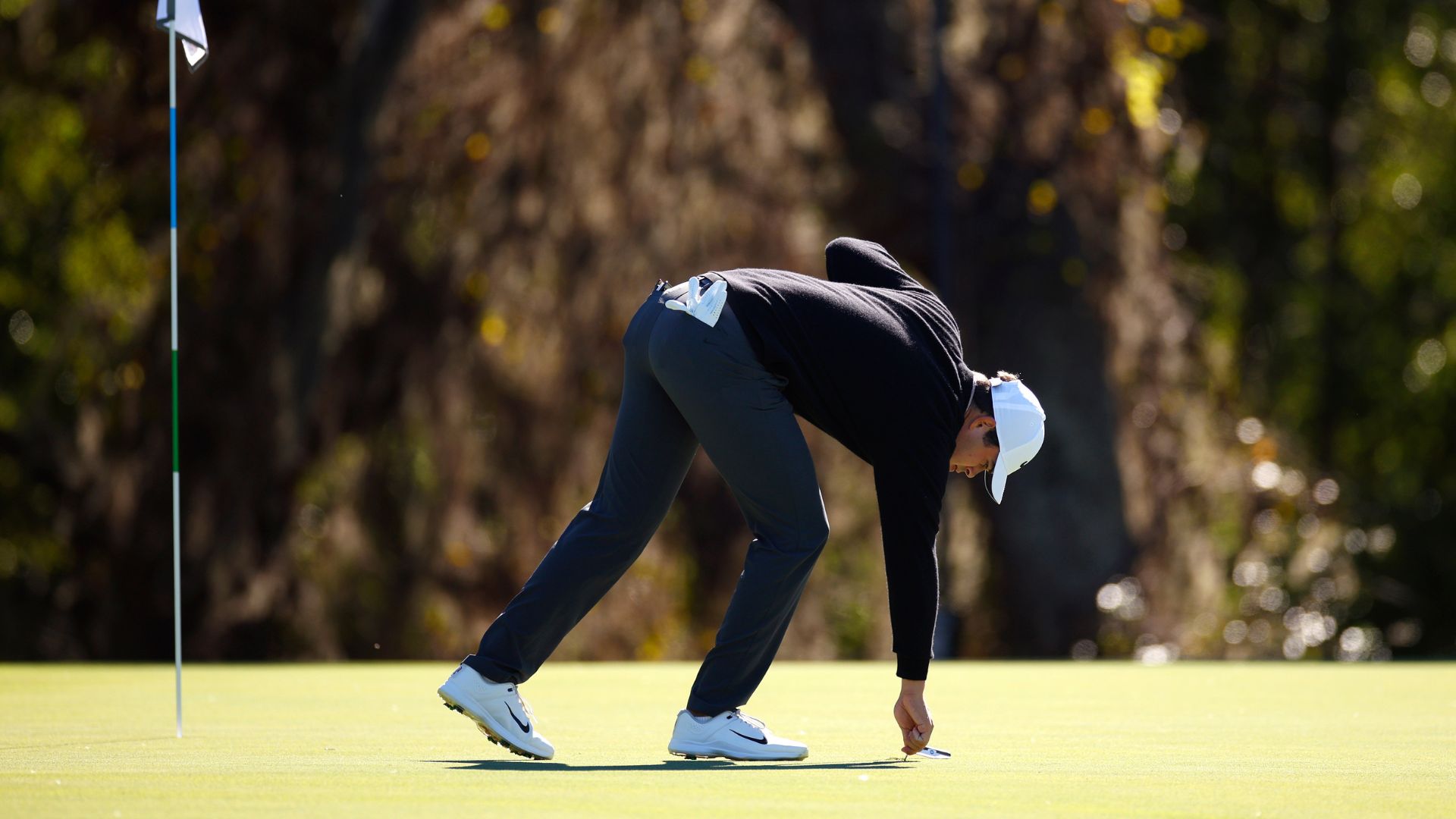
Six new PGA Tour rules come into effect, ranging from fairway relief and pitch mark adjustments to club repair guidelines.
On Tuesday, the PGA Tour announced five new local model rules to players, adding another change related to preferred lies. Thus, the season will start next week at the Sony Open in Honolulu, Hawaii, with a total of six new rules. Steven Rintoul, Vice President of Rules and Officiating for the PGA Tour, told golf.com: ‘Good, sensible outcomes for golf at the highest level.’ He noted these local model rules, approved by USGA and R&A effective January 1, 2026, continue the modernization process of the rulebook that started in 2019.
Below we present the new rules and local model rules, explaining the reasoning behind these decisions:
New PGA Tour Rules on Unintentional Ball Movement Penalties
According to Rule 9.4b, a player receives a penalty stroke if they move their stationary ball and fail to replace it before their next stroke, even if unaware the ball moved. This results in one penalty stroke; however, the player is not deemed to have played from a wrong place (Rule 14.7a – two penalty strokes) if it later emerges they caused the ball movement.
If a player notices the ball has moved, does not replace it, and plays from the new spot, the general penalty under Rule 14.7a applies for playing from the wrong place. Even if later evidence shows the player caused the movement but mistakenly thought otherwise, the general penalty still applies.
This rule arose from an incident involving Shane Lowry at the 2025 Open Championship at Royal Portrush, where during a practice swing at hole 12, he minimally moved the ball without realizing it. After the round, officials imposed a two-stroke penalty following extensive review aided by video evidence. Lowry found the penalty hard to accept but accepted it without dispute.
Penalty Relief Now Permitted if Ball Lies in Another Player’s Pitch Mark
The next rule change addresses situations when a player’s ball rests in another player’s pitch mark. Previously, penalty-free relief was allowed only if the ball was in the player’s own pitch mark. Now, under Rule 16.3b, a player can claim relief if an official confirms the ball lies in a pitch mark below ground level made by another player’s stroke. Repaired pitch marks, whether intentionally or accidentally fixed by club, foot, or maintenance machinery, are exempt and do not permit relief.
Due to repeated cases, including Shane Lowry again at the 2025 Open, where his ball landed in a pitch mark and officials denied relief, these adjustments aim to clarify this rule. Lowry subsequently missed his approach and expressed frustration over the ruling.