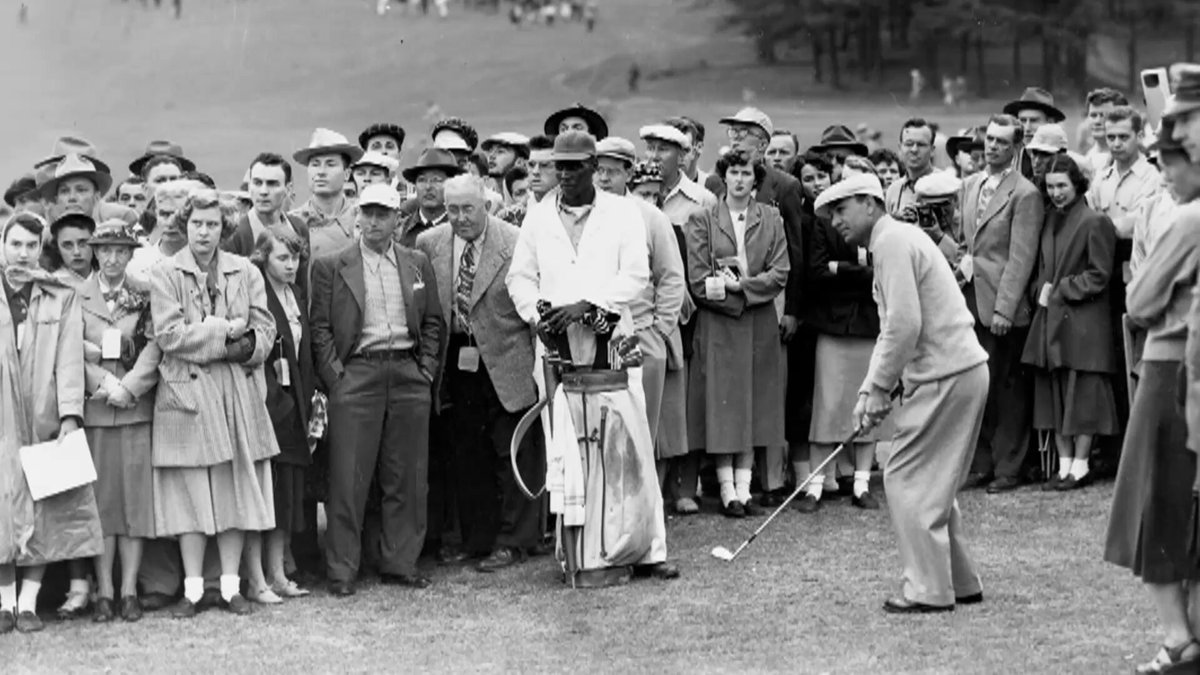
Two Texas legends, two Green Jackets each. Crenshaw reflects on Hogan’s precision and character ahead of Masters anniversary.
Ben Crenshaw, himself a two-time Masters champion, recently shared his admiration for fellow Texan Ben Hogan as the golf world marked 75 years since Hogan’s first Green Jacket victory in 1951. In a tribute that highlighted both the technical brilliance and personal character of the legendary Fort Worth native, Crenshaw painted a portrait of a golfer unlike any other.
“He played a different game than most people,” Crenshaw reflected. “There was like no nonsense in his game in the way that he thought he could get his ball around this golf course without difficulty.” The precision with which Hogan approached Augusta National Golf Club became the hallmark of his play. In that historic 1951 final round, the 40-year-old Hogan carded a bogey-free 68—the only sub-70 round of the day—showcasing the methodical, risk-averse strategy that defined his career.
Crenshaw, who has become something of a golf historian through his deep knowledge of the game’s traditions and history, drew comparisons between his own success and that of his Texas predecessors. “He almost played golf like a machine,” Crenshaw said of Hogan. “Such precision. The way that he played, people will never forget.”
A Texas Legacy
Texas has produced an outsized number of Masters champions—ten in total have claimed the Green Jacket, with five of those winning it more than once. Hogan and Crenshaw represent just part of this distinguished lineage. Crenshaw spoke of the inspiration drawn from playing in the shadow of greatness: “What I was most proud of is that I followed a wonderful group of Texans. When you grow up in a state with Ben Hogan, Byron Nelson, Jackie Burke, they’re way up there and you only hope to emulate something close to what they did for our state.”
Hogan’s first Masters victory in 1951 preceded his second Green Jacket by just two years. Both victories exemplified the tactical approach that Crenshaw emphasized. “He just had this iron will about him that exuded his being,” Crenshaw said. “Growing up in Texas, you had the weather, always the wind is blowing, sometimes you had hard ground to play. It was difficult conditions. You know, if you play hard ground in Texas and you go up east to play, the more predictable bounces.”
Character and Principle
Beyond his technical prowess, Hogan’s character left an indelible mark on the Masters itself. In 1951, following his championship victory, Hogan established what would become tradition: the Masters Champions Dinner, where the defending champion picks up the tab. When Augusta National offered Hogan a travel stipend of $1,000 to attend the dinner, he respectfully declined in a letter to committee member Alex Franklin.
“Under no circumstances would I accept your generous check for $1,000 and the check is returned for cancellation,” Hogan wrote. “I made the quick trip to Augusta because I wanted to attend the dinner, which I thoroughly enjoyed and while there, did absolutely nothing to earn money. Please understand my thinking because everything about the trip was a pleasure to me.”
This act of principle struck Crenshaw deeply. “That just kind of shows you the type of person he was,” Crenshaw observed. “He wasn’t going to accept anything that he didn’t think that he should have. He was very businesslike. He meant business every day of his life. Every day of his life.”
The reflections underscore why Hogan remains revered not merely as a technical innovator in golf, but as a figure whose integrity matched his competitive excellence. For Crenshaw and generations of golfers who followed, that legacy transcends tournament victories—it defines what it means to play the game with purpose.
This article was created with the help of AI and editorially reviewed. Report an issue