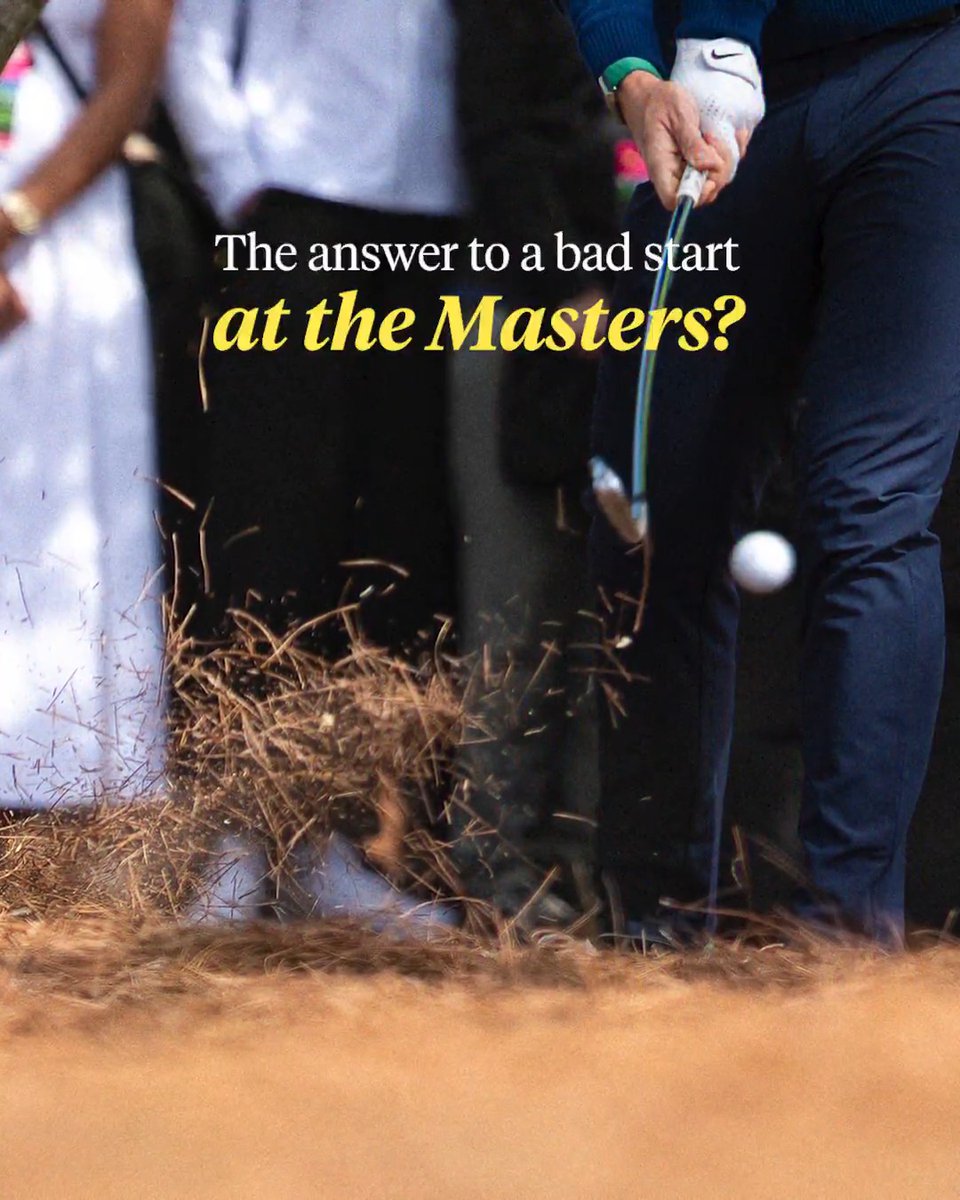
Falling behind early at Augusta? The counterintuitive answer might be to ease off the gas and trust your process instead.
Golf presents one of sport’s great paradoxes. In football, basketball, or tennis, falling behind typically calls for increased intensity and effort. But at the Masters, this instinct can backfire spectacularly.
When players stumble early at Augusta National, the difference between recovery and collapse often comes down to restraint. The smarter competitors know that the urge to make up ground quickly is precisely what derails their round. Firing aggressively at flags or attacking putts at pace might feel productive, but it frequently leads to compounding mistakes.
The Paradox of Effort in Golf
This peculiar dynamic reflects golf’s fundamental nature. Unlike team sports where momentum shifts can be forced through sheer will, golf punishes desperate attempts to manufacture results. The harder a player tries to force something, the more likely things go wrong. Panic leads to poor decision-making, and poor decision-making leads to higher scores.
The smarter approach, according to golf’s most successful players, involves shifting focus away from outcomes and toward process. Rather than obsessing over ground lost, elite players consciously choose to be more present in each shot, working deliberately through their established routines. This isn’t passive acceptance—it’s active patience.
“When I won,” one top player reflected, “it was the first year I actually fully bought into just taking it day by day and shot by shot.” This mentality transforms how a player experiences adversity. Instead of viewing a poor start as a hole to climb out of, they see it as irrelevant to what comes next.
When Urgency Becomes an Asset
That said, the answer isn’t always conservative golf. Sports psychologist Julie Elion notes that a sense of urgency can sometimes shake players out of a rut, pulling them from passive lethargy into genuine engagement.
The distinction matters. Increased urgency doesn’t mean mechanical aggression—hitting harder shots or forcing putts. Instead, it refers to sharper mental focus and heightened awareness. The player locks in with greater concentration, thinking more clearly about each decision. This is psychological intensity rather than physical intensity, a mental recalibration rather than a swing adjustment.
For Masters competitors navigating a poor start, this distinction separates recovery from disaster. The champions know the difference between forcing and focusing, between trying harder and thinking better. And at Augusta, that wisdom often determines who clips on the green jacket and who heads home.